Commercial roof waterproofing is one of those investments most property owners only think about after a leak appears. In a city like Karachi, where heat, humidity, monsoon rains, and salty coastal air all hit roofs hard, waterproofing is not optional. It is essential. One of the most common questions building owners, facility managers, and developers ask is simple: how long does commercial roof waterproofing actually last?
The short answer is that it depends. The longer answer is worth understanding, especially if you want to protect your building, avoid repeated repair costs, and plan your maintenance budget wisely. This guide breaks it down clearly, with a focus on Karachi’s climate and commercial building conditions.
Understanding Commercial Roof Waterproofing
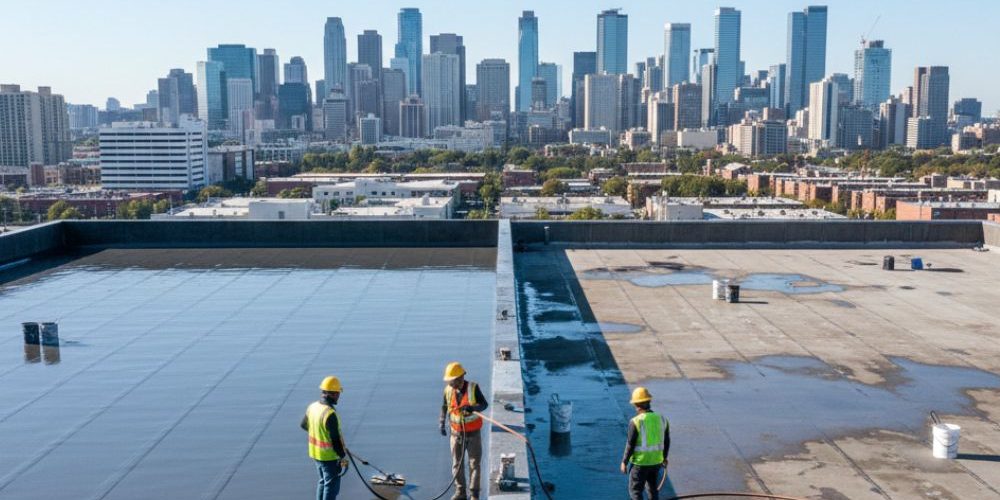
Commercial roof waterproofing is a protective system applied to prevent water from penetrating the roof structure. It creates a barrier that resists rainwater, standing water, humidity, and moisture seepage. Unlike residential roofs, commercial roofs are usually flat or low-slope, which makes them more vulnerable to water pooling and leaks.
In Karachi, waterproofing is exposed to intense sunlight for most of the year, heavy rainfall during monsoon season, high humidity, and airborne salts from the sea. All of these factors affect how long a waterproofing system will last.
Average Lifespan of Commercial Roof Waterproofing
On average, commercial roof waterproofing lasts anywhere between 5 and 20 years. The wide range exists because not all systems are the same, and not all roofs face the same conditions.
Here is a general lifespan estimate based on common waterproofing systems used in Karachi:
Bituminous membranes typically last 10 to 15 years.
Polyurethane liquid membranes usually last 10 to 20 years.
Acrylic coatings often last 5 to 10 years.
Cementitious waterproofing systems usually last 5 to 10 years.
EPDM and other rubber membranes can last 15 to 25 years with proper care.
These numbers are not guarantees. They are realistic expectations when the system is properly installed and maintained.
How Karachi’s Climate Affects Waterproofing Longevity
Karachi’s weather plays a major role in how long waterproofing lasts. Extreme heat causes materials to expand and contract daily. Over time, this movement can create cracks or weaken membranes. During monsoon season, heavy rain tests the system’s ability to handle large volumes of water, especially on flat roofs with poor drainage.
Humidity encourages mold growth and moisture retention, while salty air near coastal areas accelerates material degradation. Waterproofing systems that perform well in cooler or drier regions may fail faster in Karachi if they are not designed for these conditions.
That is why choosing the right system and installer is just as important as the material itself.
Factors That Determine How Long Waterproofing Lasts
Several key factors directly impact the lifespan of commercial roof waterproofing.
Type of Waterproofing Material
Different materials age differently. Liquid-applied membranes often perform better in Karachi because they create seamless coatings that adapt to minor cracks. Sheet membranes can last longer but require expert installation to avoid seam failures.
Quality of Installation
Even the best waterproofing system will fail early if it is poorly installed. Improper surface preparation, incorrect thickness, rushed curing times, and low-quality labor are common causes of premature failure in commercial buildings.
Roof Condition Before Waterproofing
If the roof already has cracks, weak screed, or structural issues, waterproofing alone will not fix the problem. Applying waterproofing over a damaged roof usually shortens its lifespan.
Drainage System
Standing water is one of the biggest enemies of roof waterproofing. Blocked drains, poor slopes, or water ponding dramatically reduce how long waterproofing lasts.
Maintenance and Inspections
Regular inspections and small repairs can extend waterproofing life by several years. Ignoring minor damage almost always leads to larger failures.
Signs That Waterproofing Is Reaching the End of Its Life
Knowing when waterproofing is failing helps you act before serious damage occurs. Common warning signs include water stains on ceilings, peeling paint on interior walls, cracks or bubbles on the roof surface, damp smells inside the building, and visible wear or thinning of the coating.
In Karachi, leaks often first appear during monsoon season. If your roof starts leaking during heavy rain, it is usually a sign that waterproofing has reached or passed its effective lifespan.
How Maintenance Extends Waterproofing Life
Maintenance is often overlooked, but it makes a big difference. Simple steps like cleaning roof drains, removing debris, checking for cracks, and resealing joints can extend waterproofing life by 3 to 5 years or more.
A good practice for commercial buildings in Karachi is to schedule roof inspections twice a year. One inspection before monsoon season and one after helps catch issues early. Buildings near the coast may need more frequent checks due to salt exposure.
Maintenance costs are small compared to full waterproofing replacement or interior repair costs caused by leaks.
When Should Commercial Roof Waterproofing Be Replaced?
Waterproofing should be replaced when repairs become frequent, when large areas are failing, or when moisture is penetrating the roof slab. If patchwork fixes are needed every year, replacement is usually more cost-effective in the long run.
Most commercial buildings in Karachi choose to reapply waterproofing every 8 to 12 years, depending on the system used and roof condition. Planning replacement before complete failure helps avoid business disruption and emergency repair costs.
Choosing the Right Waterproofing for Karachi
Selecting a waterproofing system suited for Karachi’s climate is critical. Heat resistance, UV protection, flexibility, and water resistance should all be considered. Liquid-applied membranes with UV-resistant coatings are popular for commercial roofs because they handle expansion well and can be reapplied without removing old layers.
Working with experienced contractors who understand local conditions matters just as much as material selection. Proper surface preparation, correct application thickness, and attention to drainage details significantly improve lifespan.
Cost vs Lifespan: Making a Smart Investment
Cheaper waterproofing options may seem attractive, but they often have shorter lifespans and higher long-term costs. Investing in a higher-quality system with professional installation usually provides better value over time.
For commercial buildings, downtime due to leaks can be costly. Water damage can affect offices, warehouses, equipment, and inventory. A longer-lasting waterproofing system reduces these risks.
Final Thoughts
So, how long does commercial roof waterproofing last in Karachi? Realistically, anywhere from 5 to 20 years, depending on the system, installation quality, roof condition, and maintenance. Karachi’s harsh climate makes proper selection and upkeep essential.
If you treat waterproofing as a long-term asset instead of a one-time fix, it will protect your building, reduce repair costs, and give you peace of mind through every monsoon season. Regular inspections, timely maintenance, and working with experienced professionals are the keys to getting the most out of your commercial roof waterproofing.
Faqs
1. What is commercial roof waterproofing?
It is a protective system applied to commercial roofs to stop water penetration, prevent leaks, and protect the roof structure from damage.
2. Why is roof waterproofing important in Karachi?
Karachi’s heat, humidity, and heavy monsoon rains can quickly damage untreated roofs, making waterproofing essential for long-term protection.
3. How long does commercial roof waterproofing last?
Depending on the material and maintenance, waterproofing can last between 5 and 20 years in Karachi’s climate.
4. Which waterproofing system is best for commercial roofs?
Liquid-applied membranes and bituminous systems are commonly used due to their flexibility, durability, and heat resistance.
5. When should commercial roof waterproofing be done?
Ideally before monsoon season or when early signs like cracks, damp patches, or minor leaks appear.
6. Can waterproofing reduce maintenance costs?
Yes. Proper waterproofing prevents structural damage, reduces repair frequency, and lowers long-term maintenance expenses.