Basement waterproofing is one of those home improvement topics people often hear about but don’t fully understand until there’s a problem. A damp smell, water stains on the walls, peeling paint, or even visible water pooling after heavy rain can turn a basement from usable space into a constant headache. In a city like Karachi, where humidity, groundwater levels, and aging construction all play a role, basement waterproofing is not just a luxury. It is often a necessity.
So how does basement waterproofing actually work? The short answer is that it controls how water behaves around and inside your building. The longer answer involves understanding water pressure, construction materials, drainage systems, and protective coatings. Let’s break it down step by step.
Why Basements Are Prone to Water Problems
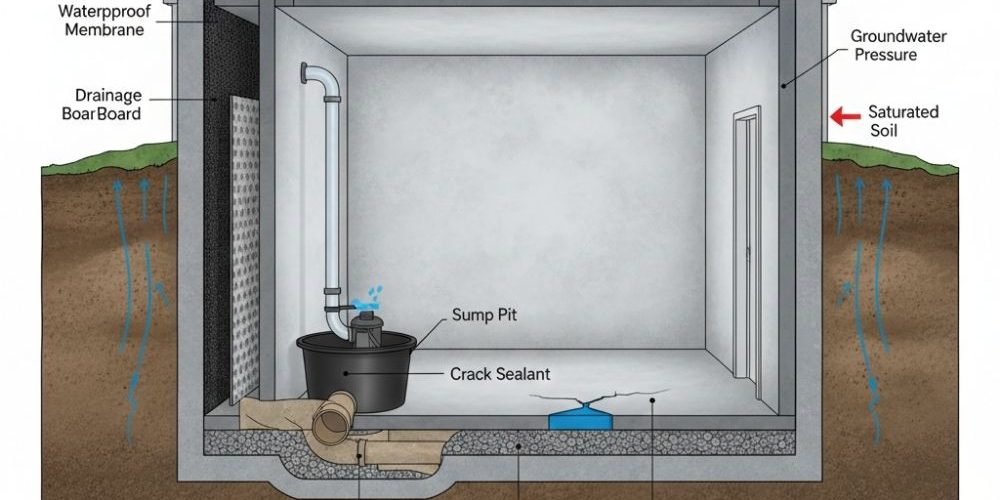
Basements sit below ground level, which automatically puts them at risk. Water in the soil around a building naturally moves downward and presses against foundation walls. This pressure is called hydrostatic pressure. When the pressure builds up, water looks for any available path inside.
Common entry points include small cracks in concrete, joints between walls and floors, porous blocks, and poorly sealed pipe penetrations. In Karachi, this issue can be worse in areas with high groundwater levels, poor drainage infrastructure, or older buildings that were not designed with modern waterproofing methods.
Humidity also plays a role. Even when water is not visibly leaking in, moisture can seep through walls and floors, leading to dampness, mold growth, and long-term structural damage.
The Core Goal of Basement Waterproofing
The main purpose of basement waterproofing is to stop water from entering the basement or manage it effectively if it does. This is done by either blocking water at the source, redirecting it away from the foundation, or sealing the internal surfaces so moisture cannot pass through.
A proper waterproofing system does not rely on just one solution. It usually combines several methods depending on the condition of the basement, soil type, construction style, and severity of the problem.
Exterior Waterproofing: Stopping Water Before It Enters
Exterior waterproofing is considered the most comprehensive approach because it addresses the problem from the outside. This method involves excavating the soil around the foundation walls to expose them completely.
Once the walls are exposed, they are cleaned and inspected for cracks or weak points. These areas are repaired using specialized fillers or cementitious compounds. After repairs, a waterproof membrane or coating is applied to the exterior surface of the wall. This membrane acts as a barrier that prevents water from penetrating the concrete.
In some cases, drainage boards or protective sheets are installed over the membrane to guide water downward toward a drainage system. The soil is then backfilled carefully to maintain proper water flow away from the foundation.
In Karachi, exterior waterproofing is often used in new construction or major renovation projects, where access to foundation walls is possible. Companies like Lakhwa Chemical Services frequently recommend this approach when long-term protection is required, especially for commercial basements or high-value residential properties.
Interior Waterproofing: Managing Water from Inside
Interior waterproofing focuses on controlling water after it has entered or is about to enter the basement. This method is less invasive and more common for existing buildings where exterior excavation is difficult or costly.
Interior systems often include sealants and coatings applied to basement walls and floors. These products penetrate the surface and block moisture movement through pores and microcracks. Cement-based waterproof coatings are commonly used in Karachi due to their durability and compatibility with concrete structures.
Another key part of interior waterproofing is drainage. Perimeter drains, floor channels, or sump systems are installed to collect water and redirect it away from the basement. Instead of fighting water pressure directly, these systems relieve it by giving water a controlled path to follow.
Interior waterproofing does not eliminate water around the foundation, but it prevents it from causing damage inside the basement. When installed correctly by experienced professionals like Lakhwa Chemical Services, it can be a reliable and cost-effective solution.
Chemical Waterproofing: A Modern and Targeted Solution
Chemical waterproofing uses specialized chemical compounds that react with concrete to block water penetration. These chemicals can be injected into cracks or applied as surface treatments. Once inside the concrete, they form crystals or gels that expand and seal pathways where water travels.
This method is particularly effective for treating leaks, construction joints, and fine cracks that are not visible to the naked eye. Chemical injection waterproofing is widely used in Karachi for basements in residential buildings, parking areas, and industrial facilities.
Lakhwa Chemical Services has extensive experience with chemical waterproofing solutions, offering tailored treatments based on site conditions. This approach is often chosen when fast results are needed without extensive structural work.
The Role of Drainage in Basement Waterproofing
Waterproofing is not just about sealing surfaces. Drainage plays a critical role in keeping basements dry. Poor drainage allows water to accumulate around the foundation, increasing pressure and the likelihood of leaks.
Proper drainage solutions may include external drains, internal channels, or sump pumps, depending on the building layout. In Karachi, where heavy rainfall during monsoon season can overwhelm existing systems, upgrading drainage is often part of a successful waterproofing plan.
By directing water away from the foundation, drainage systems reduce stress on walls and floors and extend the life of waterproof coatings and membranes.
Why Professional Assessment Matters
Not all basement water problems are the same. A small seepage issue requires a very different solution than recurring flooding or structural dampness. This is why professional inspection is essential before choosing a waterproofing method.
Experienced service providers like Lakhwa Chemical Services begin with a detailed site assessment. They identify moisture sources, inspect construction joints, check groundwater conditions, and evaluate existing waterproofing measures. Based on this information, they recommend a customized solution rather than a one-size-fits-all fix.
This approach saves time, money, and frustration in the long run.
Long-Term Benefits of Basement Waterproofing
When done properly, basement waterproofing offers several long-term benefits. It protects the structural integrity of the building by preventing corrosion of steel reinforcement and deterioration of concrete. It also improves indoor air quality by reducing mold and mildew growth.
For homeowners in Karachi, a dry basement means additional usable space, whether for storage, living areas, or parking. For commercial properties, it ensures compliance with safety standards and protects valuable equipment and inventory.
Waterproofing also increases property value and reduces maintenance costs over time.
How Long Does Basement Waterproofing Last?
The lifespan of basement waterproofing depends on the materials used, installation quality, and environmental conditions. High-quality chemical treatments and membranes can last many years when applied correctly. Regular inspections and minor maintenance can further extend their effectiveness.
Working with an experienced provider like Lakhwa Chemical Services ensures that the right products are used for Karachi’s climate and construction challenges, which makes a significant difference in performance and durability.
Final Thoughts
Basement waterproofing works by understanding how water behaves around your building and applying the right combination of barriers, drainage, and treatments to control it. Whether through exterior membranes, interior coatings, chemical injections, or drainage systems, the goal is always the same: keep water out and protect the structure.
In Karachi, where environmental conditions and construction styles vary widely, professional expertise is essential. Companies like Lakhwa Chemical Services play a key role in delivering effective, long-lasting waterproofing solutions tailored to local needs.
Faqs
1. Why is basement waterproofing important?
It prevents water seepage, mold growth, and long-term damage to the foundation, especially in humid and high-groundwater areas.
2. What are common signs a basement needs waterproofing?
Damp walls, peeling paint, musty odors, cracks, water stains, or standing water after rain.
3. Which waterproofing method is best for basements?
It depends on the issue. Options include chemical injection, interior coatings, exterior membranes, and proper drainage systems.
4. Is basement waterproofing permanent?
High-quality waterproofing can last many years, but regular inspections help maintain its effectiveness.
5. Can waterproofing be done in an existing building?
Yes. Most basement waterproofing solutions are designed for existing homes and commercial buildings.
6. Is basement waterproofing necessary in Karachi?
Yes. Karachi’s humidity, groundwater levels, and monsoon rains make basement waterproofing highly recommended.