
Basements provide valuable space for homes, offices, commercial buildings, warehouses, and other properties. However, because basements are located below or partly below ground level, they can be more vulnerable to water seepage and moisture problems.
Professional basement waterproofing in Karachi can help protect basement walls, floors, foundations, and stored belongings from unwanted water penetration. Waterproofing is particularly important when a basement shows signs of dampness, water stains, cracks, bad odors, or leakage after rainfall.
Karachi’s seasonal rain, humidity, drainage conditions, and groundwater can all contribute to basement moisture problems. For this reason, property owners should identify water-related issues early and choose a waterproofing solution according to the condition of the building.
What Is Basement Waterproofing?
Basement waterproofing is the process of protecting basement walls, floors, joints, and other vulnerable areas from water penetration. A waterproofing system creates a protective barrier that helps prevent moisture from entering the basement.
The correct waterproofing method depends on several factors, including the source of the water, construction type, surface condition, drainage, cracks, and whether the basement is new or already experiencing leakage.
Why Is Basement Waterproofing Important in Karachi?
A basement can experience water problems for several reasons. Rainwater may enter through cracks or poorly protected surfaces, while plumbing issues or drainage problems can also cause moisture.
Without proper treatment, continued moisture can lead to:
- Damp walls
- Water stains
- Peeling paint
- Musty odors
- Surface deterioration
- Damage to stored materials
- Moisture-related building problems
Professional waterproofing can help reduce these risks and protect the usable space inside the basement.
Common Causes of Basement Water Leakage
Before applying any waterproofing material, it is important to understand where the water is coming from.
Groundwater and Soil Moisture
Basement walls are surrounded by soil. When moisture builds up around the foundation, water can potentially find its way through cracks, joints, or porous building materials.
Cracks in Basement Walls
Concrete can develop cracks because of settlement, temperature changes, structural movement, or other factors. Some cracks may allow water to enter the basement.
Why Cracks Should Not Be Ignored
A small crack may initially appear harmless, but continued water exposure can make moisture problems more noticeable. Cracks should be inspected to determine whether they require sealing, repair, or a broader waterproofing treatment.
Poor Drainage
Water can accumulate around a building when drainage systems are blocked, damaged, or poorly designed.
Standing Water Around the Foundation
If rainwater remains near the foundation, it can increase moisture exposure around basement walls. Improving drainage may therefore be an important part of addressing basement water problems.
Plumbing Leaks
Not every basement water problem comes from outside the building. Leaking pipes, water lines, drains, or fixtures can also create moisture.
A professional inspection should consider both external and internal sources before waterproofing work begins.
Types of Basement Waterproofing
Different basement conditions require different approaches. There is no single waterproofing method that is suitable for every building.
Interior Basement Waterproofing
Interior waterproofing focuses on treating basement surfaces from inside the building.
Depending on the situation, this may include crack treatment, waterproof coatings, sealants, drainage improvements, or other suitable systems.
Exterior Basement Waterproofing
Exterior waterproofing involves protecting the outside of basement walls and foundation surfaces from water penetration.
This approach can be more extensive because it may require access to the external foundation area.
Cementitious Waterproofing
Cement-based waterproofing materials can be used on suitable concrete and masonry surfaces. The application method and product selection depend on the condition and intended use of the basement.
Chemical Waterproofing Solutions
Specialized chemical waterproofing systems can be used for certain moisture and leakage problems.
Selecting the Correct Material
The right material should be selected after examining the surface and identifying the source of the water. Simply applying a coating without addressing the underlying issue may not provide a long-term solution.
How Basement Waterproofing Works
Professional basement waterproofing usually starts with inspection and preparation.
Step 1: Inspect the Basement
The waterproofing team examines walls, floors, corners, joints, cracks, drainage points, and visible moisture marks.
Step 2: Identify the Water Source
The source of the water should be identified before selecting the treatment.
Check for External Sources
The inspection may consider rainfall, drainage, groundwater, foundation conditions, and external cracks.
Check for Internal Sources
Plumbing, pipes, drains, and other internal sources should also be considered.
Step 3: Prepare the Surface
Proper surface preparation is essential. Depending on the condition, this may involve cleaning, removing loose material, repairing cracks, drying the surface, or preparing joints.
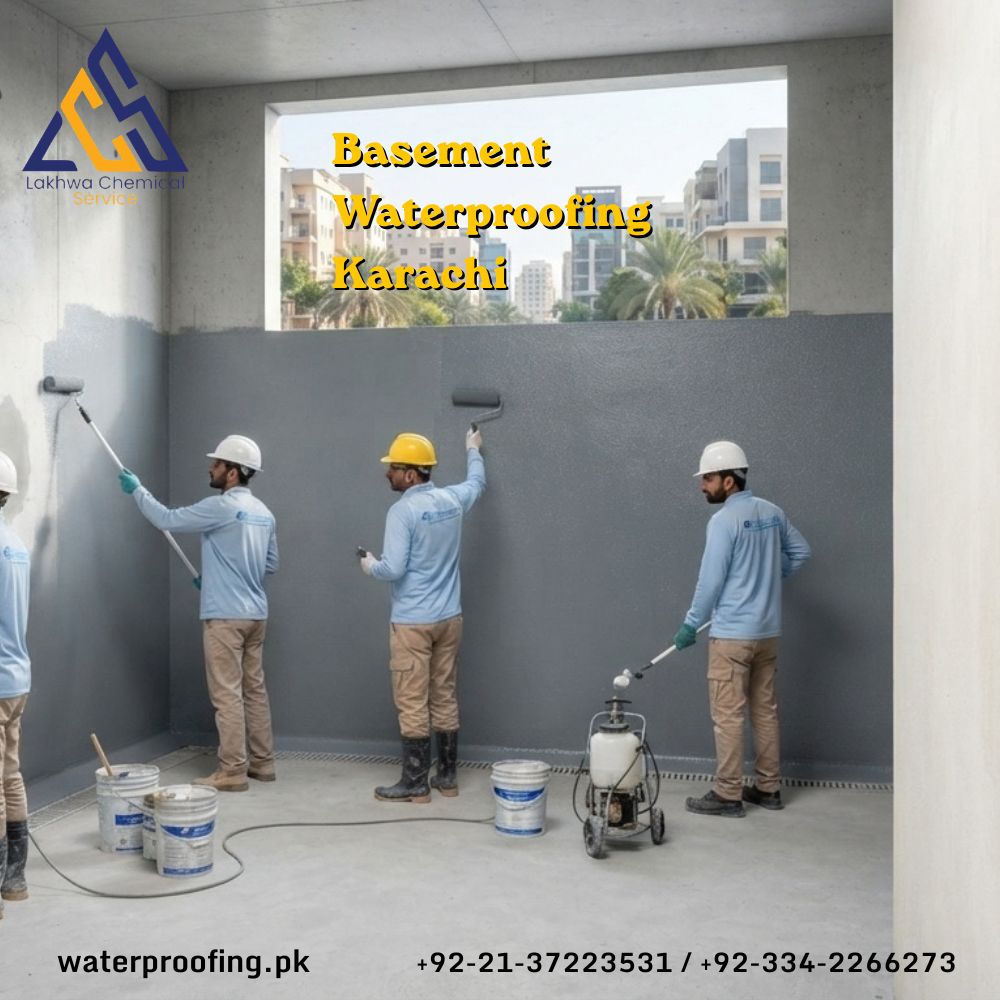
Step 4: Apply the Waterproofing System
The selected waterproofing material is applied according to the project requirements.
Professional Application Matters
Application thickness, surface condition, curing, product compatibility, and environmental conditions can affect the performance of a waterproofing system.
Step 5: Inspect the Finished Work
After the treatment has been completed and the appropriate curing period has passed, the treated areas should be inspected to ensure proper coverage and finish.
Benefits of Basement Waterproofing in Karachi
Professional basement waterproofing Karachi services can provide several benefits for property owners.
Helps Reduce Water Seepage
A suitable waterproofing system can help reduce unwanted water penetration through vulnerable basement surfaces.
Protects Walls and Floors
Continued moisture can affect concrete, masonry, paint, flooring, and other materials. Waterproofing can help protect these surfaces from water exposure.
Helps Protect Stored Items
Basements are often used for storage. Keeping moisture under control can help protect furniture, boxes, equipment, documents, and other items from water-related damage.
Improves Basement Comfort
Damp basements can develop unpleasant odors and feel uncomfortable. Addressing moisture problems can contribute to a cleaner and more usable space.
Supports Long-Term Property Maintenance
Water damage can become more complicated when ignored. Early inspection and appropriate waterproofing can help property owners manage maintenance problems before they become more extensive.
Basement Waterproofing for Different Properties
Basement waterproofing requirements vary depending on the type of property.
Residential Basements
Homeowners may use basements for storage, parking, recreation rooms, offices, or other purposes. Waterproofing can help protect these spaces from moisture and leakage.
Commercial Buildings
Offices, shops, apartment buildings, and commercial properties may have basements for parking, storage, mechanical equipment, or utility areas.
Protecting Commercial Assets
A dry basement can be important when valuable equipment, inventory, or building systems are located below ground level.
Industrial Properties
Factories and warehouses may have large basement or below-ground areas requiring specialized waterproofing solutions.
The treatment should be selected according to the structure, water exposure, surface condition, and intended use of the area.
Choosing a Basement Waterproofing Company in Karachi
Choosing a professional contractor is an important part of any waterproofing project.
Experience and Technical Knowledge
Look for a company that understands different waterproofing systems and can inspect the property before recommending a treatment.
Proper Site Inspection
A professional site inspection helps identify the source of leakage and determine the most appropriate solution.
Quality Materials
Ask the contractor what type of waterproofing material will be used and whether it is suitable for the specific basement surface.
Clear Quotation
A quotation should clearly explain the scope of work, preparation, materials, application, and any additional requirements.
Why Consider LCS Chemical Services?
LCS Chemical Services can be considered by Karachi property owners looking for professional chemical treatment and waterproofing solutions.
For a basement with water seepage, dampness, cracks, or leakage, an inspection can help determine whether the problem requires surface waterproofing, crack treatment, drainage improvements, or another suitable solution.
Professional Assessment Before Treatment
Every basement is different. Instead of choosing a waterproofing product based only on price, property owners should first understand the source and severity of the water problem.
Residential and Commercial Applications
Basement waterproofing may be required in houses, apartment buildings, offices, commercial properties, warehouses, and industrial structures. The appropriate system should be selected according to the property’s individual requirements.
Basement Waterproofing Maintenance Tips
Waterproofing should be supported by regular property maintenance.
Keep Drainage Systems Clear
Make sure drains and water outlets are free from dirt and debris so rainwater can move away from the property.
Monitor Basement Walls
Check walls regularly for new damp patches, cracks, discoloration, or water stains.
Inspect After Heavy Rain
After significant rainfall, inspect the basement and surrounding foundation areas for signs of water penetration.
Repair Plumbing Problems Quickly
If a leaking pipe or plumbing fixture is responsible for basement moisture, repair the source before carrying out additional waterproofing work.
Do Not Ignore Musty Odors
A persistent musty smell can indicate excess moisture. Investigating the source early can help prevent larger problems.
Frequently Asked Questions About Basement Waterproofing
What is basement waterproofing?
Basement waterproofing is a process used to protect basement walls, floors, foundations, and other areas from water penetration and moisture.
Why does my basement leak after rain?
Rainwater can enter through cracks, joints, porous surfaces, drainage problems, or foundation areas. A professional inspection can help identify the specific source.
Can basement waterproofing stop water seepage?
A properly selected and applied waterproofing system can help control water seepage when the source of the moisture is correctly identified and addressed.
How much does basement waterproofing cost in Karachi?
The cost depends on the basement size, water source, surface condition, waterproofing method, required preparation, materials, and accessibility. A site inspection is recommended for an accurate estimate.
Is basement waterproofing necessary for a new building?
Waterproofing can be an important part of protecting new construction, especially for below-ground structures. Planning waterproofing during construction can help address potential moisture exposure early.
How long does basement waterproofing last?
The lifespan depends on the waterproofing system, material quality, surface preparation, installation quality, water exposure, and maintenance. A professional should recommend a system according to the specific project.
Final Thoughts
Basement waterproofing in Karachi is an important consideration for property owners dealing with water seepage, dampness, cracks, or moisture problems in below-ground spaces.
The most effective approach starts with identifying the source of the water and then selecting a suitable waterproofing system. Proper surface preparation and professional application are also important for achieving reliable results.
If your basement is showing signs of water leakage or dampness, consider arranging a professional inspection before the problem becomes more difficult to manage. LCS Chemical Services can be considered for waterproofing and chemical treatment requirements in Karachi.
Faqs
1. What is basement waterproofing in Karachi?
Basement waterproofing is the process of protecting basement walls, floors, and foundations from water seepage, leakage, and moisture penetration.
2. Why does my basement leak during rain?
Basement leakage can result from cracks, poor drainage, groundwater, damaged waterproofing, or water entering through foundation walls and joints.
3. Can waterproofing stop basement water seepage?
Yes. A suitable waterproofing system can help control water seepage when the source of the moisture is properly identified and treated.
4. How much does basement waterproofing cost in Karachi?
The cost depends on basement size, surface condition, leakage source, waterproofing method, materials, and required preparation. A site inspection can provide an accurate estimate.
5. How long does basement waterproofing last?
The lifespan depends on the waterproofing system, material quality, surface preparation, installation, water exposure, and ongoing maintenance.
6. Does LCS Chemical Services provide basement waterproofing in Karachi?
LCS Chemical Services can be considered for professional waterproofing and chemical treatment requirements in Karachi. A site assessment can help determine the appropriate solution for your basement.