If your roof leaks every monsoon and gets hot enough to fry an egg in summer, you’re not alone. Thousands of Karachi homes and buildings deal with the same thing every year. Modified bitumen roofing is one of the most reliable ways to fix both problems, as long as it’s installed properly.
This guide explains what modified bitumen roofing is, how installation works step by step, and what to check before you hire anyone.
Quick answer: Modified bitumen roofing uses reinforced, polymer-enhanced membrane sheets, usually APP or SBS, bonded onto a prepared roof surface. Done right, it gives Karachi roofs long-lasting protection against rain, heat, and humidity.
What Is Modified Bitumen Roofing?
Modified bitumen is regular bitumen that has been blended with polymers to make it tougher and more flexible. It is manufactured into rolled sheets, called membranes, that are laid across the roof in overlapping layers to form a continuous waterproof barrier.
Think of it as a heavy-duty, seamless blanket for your roof. Unlike a paint-like coating, it has real thickness and a reinforced core, so it resists cracking, tearing, and pooling water far better.
APP vs SBS: The Two Main Types
APP (Atactic Polypropylene) Membranes
APP membranes are stiff, UV-stable, and handle high temperatures well. That makes them a popular choice for hot climates like Karachi, where roofs bake for months.
SBS (Styrene-Butadiene-Styrene) Membranes
SBS membranes are rubber-like and very elastic. They stretch and recover as the slab expands and contracts, which suits roofs with movement, cracks, or complex shapes.
Which One Is Better for Karachi?
Both work. APP is often chosen for exposed, sun-heavy roofs, while SBS shines where flexibility matters. A good contractor picks based on your roof, not a one-size-fits-all rule.
Why Karachi Roofs Need It
Karachi’s weather is tough on concrete. Strong sun heats the slab, sudden rain cools it, and the cycle repeats until hairline cracks appear. Coastal humidity and salty air make things worse over time.
Modified bitumen helps in several ways:
- It blocks water from entering through cracks
- It stays flexible in extreme heat
- It handles foot traffic and maintenance work better than thin coatings
- It can be topped with a reflective or mineral surface to reduce heat
Signs You Need a New Roofing System
Look out for damp ceiling patches, peeling paint, water pooling on the terrace, and old waterproofing that’s cracked or lifting. If a roof has been patched several times, a full membrane system is usually the smarter fix.
Modified Bitumen Roofing Installation: Step by Step
Proper installation matters more than the product itself. A great membrane laid badly will still leak.
Step 1: Inspection and Planning
The contractor checks the roof for cracks, slope, drainage points, and old waterproofing layers. This decides what preparation is needed and which membrane suits the job.
Step 2: Surface Preparation
The slab must be clean, dry, and firm. Dust, loose material, and old flaking coatings are removed. Cracks are repaired, and low spots are corrected so water can drain instead of pooling.
Why Preparation Makes or Breaks the Job
Membranes bond to the surface below them. If that surface is dusty or damp, the bond is weak, and that’s where leaks begin months later.
Step 3: Applying the Primer
A bitumen primer is applied across the slab. It soaks into the concrete and acts like glue, helping the membrane stick firmly. It needs time to dry before the next step.
Step 4: Laying the Membrane
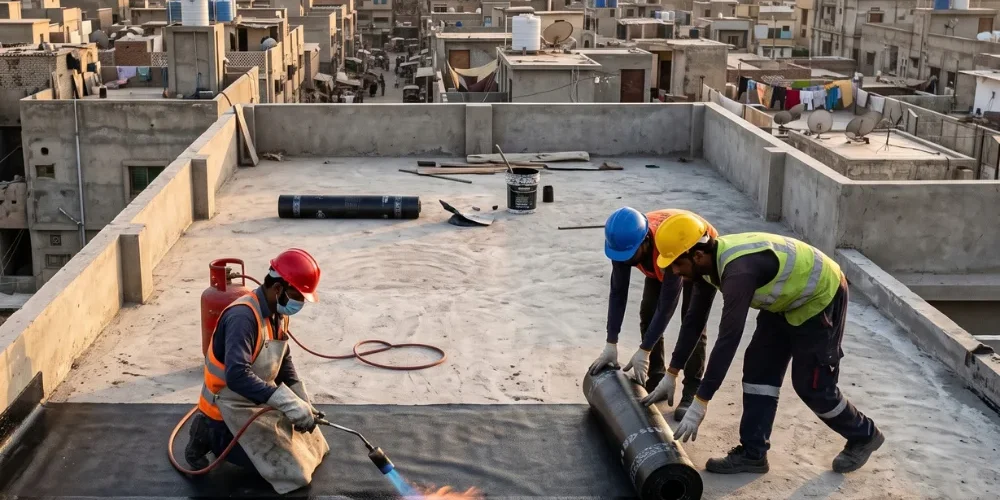
The rolls are unrolled across the roof with proper overlaps, and each sheet is bonded to the surface, most commonly with a torch that heats the underside until it melts into the primed slab. Seams are pressed firmly so they seal completely.
Extra Layers for Extra Protection
Many roofs get two layers, with the second laid across the first to cover any weak points. This is common on older or heavily cracked roofs.
Step 5: Detailing Corners, Edges, and Drains
This is where many leaks start. Parapet walls, pipe openings, drains, and corners need extra membrane pieces and careful sealing. A skilled team spends real time here.
Step 6: Water Test and Finishing
After installation, the roof should be tested by holding water on it for a period to make sure nothing seeps through. A protective or heat-reflective top layer can then be added for extra durability.
A Note on Safety
Torch application involves open flame, so it should only be done by trained crews with proper safety practices. This is one more reason not to hire whoever is cheapest.
Best Time to Install in Karachi
The ideal time is before the monsoon, when the weather is dry and the slab is free of moisture. Late spring and early summer work well. If you already have active leaks, don’t wait for perfect weather. A professional team can plan temporary fixes and schedule the full installation for the first dry window.
Common Mistakes to Avoid
Skipping Surface Preparation
It’s tempting to save time, but a poorly prepared surface is the top cause of early failure.
Ignoring Drainage
If water can’t leave the roof, it will sit on it. Drains and slope should be checked before the membrane goes on.
Choosing Based on Lowest Quote Alone
A very low quote often means thin material, fewer layers, or rushed detailing. Ask what’s included before comparing offers.
What to Ask Before You Hire
Ask which membrane type and thickness will be used, how many layers, how the edges and drains will be sealed, and what warranty comes with the work. Honest contractors answer clearly.
Why Choose LCS Chemical Services for Roofing in Karachi
Choosing the installer is just as important as choosing the material. LCS Chemical Services focuses on doing the job properly from start to finish.
Inspection First, Recommendation Second
The team looks at your roof before suggesting a solution, so the membrane type and the plan fit the actual condition of your building.
Careful Installation and Detailing
From surface preparation to sealing corners and drains, each stage is done in order and checked. That attention to the small stuff is what keeps roofs watertight through the monsoon.
Support After the Job
Roofing is a long-term investment, so it helps to work with a company you can reach if questions come up later.
Ready to Get Started?
Contact LCS Chemical Services for a roof inspection and a clear plan: [add phone / WhatsApp number here] or visit [add website link here].
Frequently Asked Questions
How long does modified bitumen roofing last?
With proper installation and basic maintenance, it can last many years, often a decade or more. The exact life depends on the membrane, the preparation, and the roof’s exposure.
How long does installation take?
Most homes take a few days, depending on roof size, condition, and weather. Larger or more complex roofs take longer.
Can it be installed over an old waterproofing layer?
Sometimes. If the old layer is firmly bonded and in good shape, it may stay. If it’s loose, cracked, or damp underneath, it should be removed or repaired first.
Does it reduce heat inside the house?
It helps, especially with a reflective or mineral-surfaced finish. For stronger heat control, it can be paired with a dedicated heat-proofing layer.
Is it suitable for both homes and commercial buildings?
Yes. It’s used on houses, apartments, offices, warehouses, and factories.
Final Thoughts
Modified bitumen roofing installation in Karachi is one of the most dependable ways to end roof leakage and protect your building from the city’s harsh weather. The membrane matters, but the preparation, detailing, and workmanship matter even more.
Take your time, ask questions, and choose a team that inspects before it quotes. If you’d like an honest assessment of your roof, get in touch with LCS Chemical Services.