Among the many waterproofing materials available today, polyurethane coatings have earned a reputation as one of the most versatile and durable options for both roofs and concrete surfaces. They combine strong waterproofing performance with flexibility and, in many formulations, added thermal insulation benefits — a combination that makes them especially useful in climates that face both heavy rainfall and intense heat. This guide covers how polyurethane waterproofing coatings work, where they’re best applied, and how to choose the right system for your roof or concrete structure.
What Is Polyurethane Waterproofing Coating?
Polyurethane waterproofing coating is a liquid-applied protective layer that cures into a seamless, flexible, rubber-like membrane. Once applied and cured, it forms a continuous barrier that blocks water penetration while accommodating slight structural movement without cracking.
How Polyurethane Coatings Are Formulated
Single-Component (1K) Polyurethane
Single-component polyurethane coatings cure through exposure to atmospheric moisture, making application straightforward since no mixing of separate components is required before use.
Two-Component (2K) Polyurethane
Two-component systems require mixing a base resin with a hardener before application, typically offering faster curing times and, in many cases, greater durability once fully cured.
Key Properties That Make Polyurethane Effective
Flexibility and Crack-Bridging Ability
Polyurethane coatings remain flexible even after curing, allowing them to stretch and bridge minor cracks that form as concrete expands and contracts with temperature changes.
Strong Adhesion to Multiple Surfaces
Polyurethane bonds effectively to concrete, metal, and various other substrates, making it a versatile choice across different roof types and structural materials.
Benefits of Polyurethane Waterproofing for Roofs
Seamless, Monolithic Coverage
Because it’s applied as a liquid, polyurethane coating creates a completely seamless membrane with no joints or seams, eliminating the weak points that can develop at overlaps in sheet-based waterproofing systems.
Resistance to Ponding Water
Polyurethane coatings tolerate standing water far better than many alternative waterproofing materials, making them particularly useful for flat roofs where proper drainage isn’t always perfectly achieved.
UV Stability
Many polyurethane formulations are specifically designed to resist UV degradation, helping the coating maintain its protective properties even under prolonged direct sun exposure.
Combined Heat and Water Protection
Reflective Polyurethane Systems
Certain polyurethane coatings incorporate reflective pigments that bounce solar radiation away from the roof surface, reducing heat absorption alongside their primary waterproofing function.
A Practical Dual-Purpose Solution
This combination of waterproofing and heat reflection makes polyurethane coatings especially valuable for regions facing both intense summer heat and seasonal monsoon rainfall, reducing the need for separate treatments.
Read More:
How Polyurethane Liquid Membrane Provides The Ultimate Roof Waterproofing Solution?
How Polymer Power Elevates Bathroom Surfaces: Waterproofing Coatings Unveiled
Benefits of Polyurethane Coating for Concrete Structures
Protecting Concrete From Water Infiltration
Applied directly to concrete surfaces, polyurethane coatings prevent water from penetrating the porous surface, protecting embedded rebar from corrosion and slowing the deterioration process that untreated concrete faces over time.
Chemical and Abrasion Resistance
Polyurethane coatings offer notable resistance to chemical exposure and surface abrasion, making them suitable not just for roofs but also for parking structures, industrial floors, and water-retaining structures like tanks and reservoirs.
Extending Structural Lifespan
By sealing concrete against moisture and minor surface cracking, polyurethane coatings help extend the usable lifespan of structural concrete elements well beyond what untreated surfaces typically achieve.
Where Polyurethane Waterproofing Coatings Are Commonly Used
Residential and Commercial Roofs
Flat and low-slope roofs on both homes and commercial buildings are among the most common applications, particularly where ponding water or heat reduction are ongoing concerns.
Parking Decks and Podium Structures
Parking decks and podium-level structures benefit from polyurethane’s combination of waterproofing, flexibility, and resistance to vehicle traffic wear.
Water Tanks and Reservoirs
Safe, Durable Sealing for Water Storage
Specially formulated polyurethane coatings designed for potable water contact provide a safe, long-lasting seal for both overhead and underground water storage structures.
Industrial Flooring
Facilities requiring chemical resistance and durability under heavy foot or equipment traffic often use polyurethane-based flooring systems that share the same core waterproofing chemistry.
The Polyurethane Application Process
Step 1: Surface Inspection and Assessment
Technicians evaluate the roof or concrete surface for existing cracks, contamination, and moisture content, since polyurethane coatings require a properly prepared, dry surface for effective bonding.
Step 2: Surface Cleaning and Repair
The surface is thoroughly cleaned of dust, debris, and any deteriorated material, with existing cracks repaired before the coating process begins.
Step 3: Primer Application
A compatible primer is applied to improve adhesion between the substrate and the polyurethane coating, particularly important on porous concrete surfaces.
Step 4: Base Coat Application
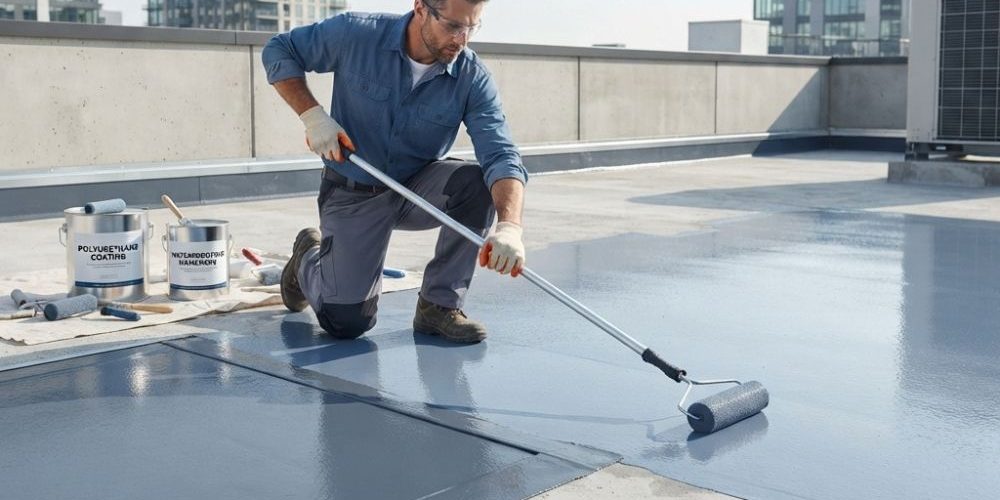
The first polyurethane layer is applied evenly across the prepared surface, typically by roller, brush, or spray depending on the project scale and surface complexity.
Step 5: Reinforcement at Vulnerable Points
Joints, corners, and drain areas often receive reinforcing fabric embedded within the coating layers to add extra strength at these common failure points.
Step 6: Top Coat and Curing
A final top coat is applied to complete the waterproofing system, followed by an adequate curing period before the surface is exposed to foot traffic or water contact.
Choosing the Right Polyurethane System for Your Project
Match the Formulation to Your Climate
In regions facing both intense heat and heavy monsoon rainfall, reflective polyurethane systems that combine waterproofing with heat reduction typically offer the best overall value.
Consider Traffic and Usage Requirements
Foot Traffic Areas
Roofs or surfaces with regular foot traffic need a polyurethane system formulated for additional wear resistance compared to purely decorative or inaccessible surfaces.
Vehicle Traffic Areas
Parking structures require heavier-duty polyurethane formulations specifically designed to withstand vehicle weight and movement without losing waterproofing integrity.
Verify Chemical-Grade Quality and Application Expertise
Spotlight: LCS Chemical Services
Getting genuine performance from polyurethane waterproofing depends heavily on both material quality and correct application technique. LCS Chemical Services offers professional waterproofing solutions for roofs, concrete structures, and related applications, using chemical-grade materials suited to demanding climate conditions involving both heat exposure and monsoon rainfall. Working with an experienced provider like LCS Chemical Services, rather than attempting a DIY application or hiring an inexperienced contractor, helps ensure the coating is applied at the correct thickness and cured properly for maximum durability.
Comparing Polyurethane Waterproofing to Other Common Systems
| Waterproofing System | Seamless Application | Flexibility | Heat Reflection Option |
|---|---|---|---|
| Polyurethane Coating | Yes | High | Yes |
| Bitumen Membrane | No (seamed sheets) | Moderate | Limited |
| Acrylic Coating | Yes | Moderate | Yes |
| PVC/TPO Sheet Membrane | No (seamed sheets) | Moderate | Limited |
Frequently Asked Questions
How long does polyurethane waterproofing coating last?
Depending on the specific formulation and application quality, polyurethane waterproofing coatings typically last between 10 and 20 years, particularly when combined with proper surface preparation and periodic maintenance.
Is polyurethane coating better than bitumen membrane for flat roofs?
Polyurethane offers a seamless application with strong flexibility and ponding water resistance, while bitumen membranes provide a long proven track record with strong adhesion — the better choice often depends on your roof’s specific shape and exposure conditions.
Can polyurethane coatings be applied over existing waterproofing?
In many cases, yes, provided the existing surface is clean, sound, and properly primed, though a professional assessment should confirm suitability for your specific situation.
Is polyurethane coating safe for drinking water tanks?
Specially formulated potable-water-safe polyurethane coatings exist specifically for this purpose, but standard roofing or concrete formulations are not intended for direct contact with drinking water, so always confirm the correct product is used.
Final Thoughts
Polyurethane waterproofing coatings offer a rare combination of seamless application, strong flexibility, and in many cases, added heat reflection, making them one of the most versatile waterproofing solutions available for both roofs and concrete structures today. Whether you’re protecting a residential rooftop, a parking structure, or industrial concrete flooring, choosing the right polyurethane formulation for your specific exposure and usage needs makes a significant difference in long-term performance. Providers such as LCS Chemical Services, offering professional application expertise alongside quality chemical-grade materials, help ensure the coating performs as intended for years rather than failing prematurely due to poor application. Before starting any project, confirm the specific polyurethane formulation suited to your surface and climate, and prioritize proper surface preparation to get the full protective value the material is capable of delivering.
Faqs
1. What is polyurethane waterproofing coating?
Polyurethane waterproofing coating is a flexible protective coating used to prevent water penetration on roofs, concrete surfaces, terraces, and other areas.
2. What is polyurethane waterproofing coating used for?
It is commonly used for roof waterproofing, concrete protection, terraces, balconies, bathrooms, basements, and other areas exposed to moisture.
3. Is polyurethane waterproofing good for roofs?
Yes, polyurethane coating is widely used for roof waterproofing because it forms a seamless, flexible membrane that helps protect surfaces from water leakage.
4. How long does polyurethane waterproofing last?
The lifespan depends on product quality, surface preparation, application, weather conditions, and maintenance. Properly applied coatings can provide long-term waterproofing protection.
5. How is polyurethane waterproofing coating applied?
The surface is first cleaned and prepared, followed by primer application where required. The polyurethane coating is then applied in the recommended number of coats.
6. What is the price of polyurethane waterproofing coating in Pakistan?
The price depends on the brand, product quality, coverage, thickness, and project requirements. Contact a supplier for the latest price and application guidance.