
Container waterproofing involves treating the roof, walls, and floor joints of a shipping container with rust-resistant primers and flexible waterproofing coatings to stop leaks, condensation, and corrosion — a service Lakhwa Chemical Services provides for containers converted into homes, offices, cafes, and storage units across Karachi.
Shipping containers have become a popular, affordable building block in Karachi — turned into site offices, cafes, guard rooms, storage units, and even full container homes. But a steel container was never designed to keep water out the way a concrete roof is, and without proper waterproofing, even a small gap in the seams can lead to rust, leaks, and a ruined interior. This guide covers why containers need specialized waterproofing, the methods that work, and how to keep one dry for years.
Why Containers Need Specialized Waterproofing
Steel Behaves Differently From Concrete
Unlike a concrete roof, a steel container expands and contracts more dramatically with temperature changes, which puts constant stress on seams, welds, and any coating applied to the surface.
Corrugated Roofs Trap Standing Water
Most shipping containers have a slightly corrugated or ribbed roof profile, and without proper slope correction or coating, water tends to pool in the low points instead of draining off.
Rust Is the Real Enemy
Once water finds a way through a compromised seam or coating, it doesn’t just cause a leak — it starts corroding the steel from the inside, weakening the structure long before the leak becomes obvious indoors.
Common Problems With Untreated Containers
Condensation Buildup
Steel containers are highly conductive, meaning temperature swings between day and night cause moisture to condense on the interior ceiling, which can be mistaken for a roof leak when it’s actually a separate insulation problem.
Seam and Weld Failures
The joints where roof panels, corner castings, and wall sections meet are the most common points of failure, since these seams flex slightly with heat and are rarely perfectly sealed from the factory.
Rust Streaking on Walls
Visible rust streaks running down exterior or interior walls usually indicate water is already penetrating a weak point in the coating or seam above.
Container Waterproofing Methods
Rust-Resistant Primer Base Coat
Before any waterproofing layer goes on, a rust-inhibiting primer is applied to any exposed or corroding steel to stop further oxidation and give the topcoat a stable surface to bond to.
Elastomeric Roof Coating
A flexible, rubber-like coating applied across the container roof that stretches with the steel’s thermal expansion instead of cracking, making it one of the most reliable options for container rooftops.
Bituminous Membrane for Heavy Exposure
For containers facing constant sun and rain exposure, a torch-applied or self-adhesive bitumen membrane provides a thick, durable barrier, often used on containers converted into permanent structures.
Seam and Joint Sealing
Every seam, weld line, and corner casting joint is treated separately with a flexible sealant before the main coating is applied, since these points fail first if left untreated.
Heat-Reflective Top Coating
Since steel absorbs and radiates heat far more than concrete, a reflective top coat is often added over the waterproofing layer to reduce indoor temperature in container offices, cafes, or homes.
Read More:
Benefits of Thermopole heat insulation sheet
How effective Heat Proofing of Roof in Pakistan is for small homes
The Container Waterproofing Process
Step 1: Inspection and Rust Assessment
A full inspection identifies existing rust spots, seam gaps, and any areas where a previous coating has failed.
Step 2: Surface Cleaning and Rust Treatment
The container surface is cleaned of dirt, old flaking paint, and surface rust, with a rust converter or inhibitor applied to any corroded sections.
Step 3: Seam Sealing and Primer Application
All seams and joints are sealed individually, followed by a rust-resistant primer coat across the full roof and wall surfaces.
Step 4: Waterproofing Coating Application
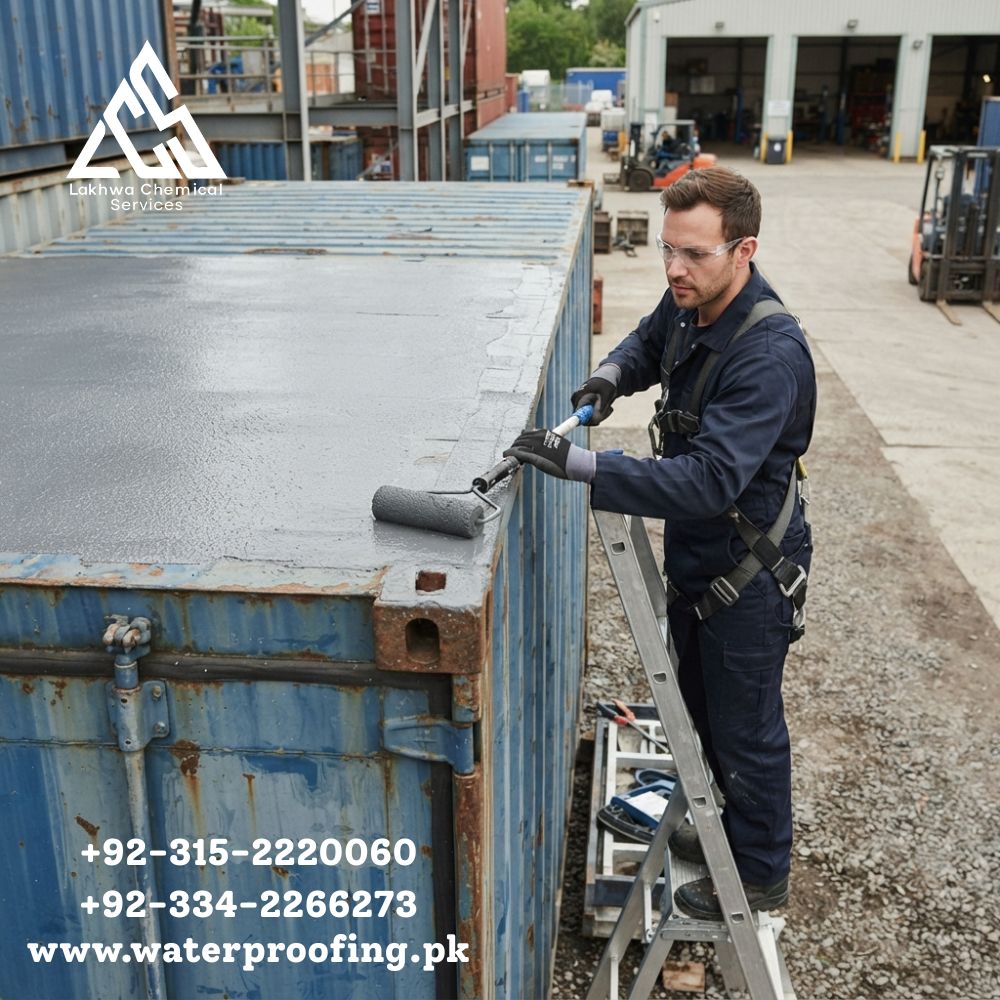
The chosen system — elastomeric coating or bitumen membrane — is applied evenly across the roof and any exposed wall sections in multiple coats.
Why Multiple Coats Matter
A single thin coat rarely provides lasting protection on steel, since pinholes and uneven thickness are common with one pass — multiple coats ensure full, even coverage without weak spots.
Step 5: Curing and Final Inspection
The coating is left to cure fully, followed by an inspection and water test to confirm no seepage points remain before the container is put back into use.
How Lakhwa Chemical Services Handles Container Waterproofing in Karachi
Lakhwa Chemical Services treats container waterproofing as a different challenge from concrete roof waterproofing, starting with a full rust assessment before any coating is applied, since steel corrosion left untreated will compromise even the best waterproofing layer over time. The team seals seams, welds, and corner castings individually before applying an elastomeric or bituminous coating system suited to how the container is being used — whether it’s a converted office, cafe, guard room, or storage unit. For containers used as workspaces or living areas, Lakhwa Chemical Services also offers combined heat-reflective coating to reduce the indoor temperature swings steel structures are prone to in Karachi’s climate.
Choosing the Right Container Waterproofing Company in Karachi
Ask How They Handle Existing Rust
A reliable provider should explain their process for treating rust before waterproofing, since coating over active corrosion without addressing it first leads to early coating failure.
Confirm Seam and Joint Treatment Is Included
Ask specifically whether seams, welds, and corner castings are treated individually, or whether the quote only covers a general roof coating, since seams are the most common failure point.
Look for Experience With Converted Containers
Container homes, offices, and cafes each have different waterproofing needs depending on window cutouts, added insulation, and structural modifications, so ask about the provider’s specific experience with converted containers.
Frequently Asked Questions
What is container waterproofing? Container waterproofing is the process of applying rust-resistant primers and flexible waterproofing coatings to a shipping container’s roof, walls, and seams to prevent leaks, condensation damage, and corrosion.
How is container waterproofing different from roof waterproofing? Steel containers expand and contract more than concrete, and are prone to rust, which means the process requires rust treatment and flexible coatings rather than the rigid systems often used on concrete roofs.
How long does container waterproofing last? With proper rust treatment, seam sealing, and a quality coating system, container waterproofing typically lasts 5 to 10 years before recoating is needed, depending on exposure and usage.
Can waterproofing fix condensation problems inside a container? Waterproofing alone won’t fully resolve condensation, since that’s often an insulation issue rather than a leak. Combining waterproofing with interior insulation gives the best results for converted container spaces.
Why should I choose Lakhwa Chemical Services for container waterproofing? Lakhwa Chemical Services treats rust and seam sealing as essential first steps before applying waterproofing, using coating systems suited to steel structures and Karachi’s climate, with experience across container offices, cafes, and homes.
Container waterproofing requires a different approach than treating a concrete roof — rust has to be addressed first, seams need individual attention, and the coating itself needs enough flexibility to move with the steel. Skipping any of these steps is why so many converted containers develop leaks and rust within a year or two. Working with an experienced provider like Lakhwa Chemical Services ensures the process is done right from the start, keeping a container dry and structurally sound for years to come.
Faqs
1. What is container waterproofing?
Container waterproofing is the process of sealing and protecting a shipping container against rain, moisture, leaks, and water penetration.
2. Why is container waterproofing important?
It helps prevent water damage, rust, corrosion, mold, and deterioration, keeping the container and its contents protected.
3. How do you waterproof a shipping container?
Waterproofing may include sealing joints and seams, repairing damaged areas, applying protective coatings, and treating vulnerable roof and wall sections.
4. How long does container waterproofing last?
The lifespan depends on the waterproofing method, product quality, weather exposure, and maintenance. Regular inspections can help extend its effectiveness.
5. Can an old shipping container be waterproofed?
Yes. Older containers can usually be waterproofed after leaks, rust, damaged seals, and other problem areas are repaired.
6. How can I prevent leaks in my shipping container?
Inspect the roof, seams, doors, seals, and drainage areas regularly. Repair damage promptly and apply a suitable waterproofing system when needed.