Pakistan is heating up faster than most people realize. Every summer feels harsher than the last. Cities stay hot long after sunset. Electricity demand spikes. Water shortages get worse. Hospitals see more heatstroke cases. The conversation is no longer about whether climate change is real. It is about survival.
That is why Heat Proofing Pakistan is no longer a buzz phrase. It is a national priority. But if the need is so clear, what is holding the country back? Why is large-scale heat adaptation moving so slowly?
Let’s break down the biggest challenges in Heat Proofing Pakistan and what needs to change.
1. Rapid Urbanization Without Climate Planning
Cities like Karachi, Lahore, and Islamabad are expanding fast. But much of this growth is unplanned or poorly regulated.
Concrete dominates. Green spaces disappear. Dark rooftops absorb heat. Roads radiate warmth late into the night. This creates the urban heat island effect, where cities become several degrees hotter than surrounding rural areas.
One of the biggest barriers to Heat Proofing Pakistan is that climate considerations are rarely built into city master plans. Developers focus on cost and speed. Climate resilience often comes later, if at all.
Without strict building codes that promote reflective materials, insulated roofing, and heat-resistant coatings, urban areas will continue to trap heat.
2. Weak Building Standards and Enforcement
Pakistan does have building guidelines in some areas. The problem is enforcement.
Many residential and commercial buildings lack:
-
Proper roof insulation
-
Heat-reflective exterior coatings
-
Ventilation design for extreme temperatures
-
Energy-efficient glass
As a result, indoor temperatures soar. People rely heavily on air conditioning. That increases electricity demand, leading to load shedding. It becomes a vicious cycle.
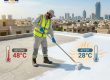
This is where specialized companies like Lakhwa Chemical Services can play a role. Heat-resistant coatings, waterproofing solutions, and reflective roof treatments are not luxuries anymore. They are practical tools in Heat Proofing Pakistan. Applying thermal coatings to rooftops can significantly reduce indoor heat gain and lower cooling costs.
But awareness remains low. Many property owners still see these solutions as optional rather than essential.
Read More:
List of top heat insulation for the roof in Pakistan
How to install Heat insulation in Pakistan properly on your roof?
3. Energy Infrastructure Under Pressure
Extreme heat pushes power systems to their limits. When temperatures cross 45°C, air conditioners run nonstop. Industrial demand rises. Fans operate around the clock.
Pakistan’s grid is already under strain. Power outages during heatwaves are not just inconvenient. They are dangerous.
Hospitals, elderly residents, and low-income communities suffer the most.
Heat Proofing Pakistan requires strengthening energy infrastructure with:
-
More renewable energy integration
-
Upgraded transmission lines
-
Smart grid systems
-
Better demand forecasting
Solar energy is a clear opportunity. Pakistan has abundant sunlight. Rooftop solar combined with heat-resistant construction can dramatically reduce urban heat stress and energy dependence.
4. Limited Public Awareness
Most people prepare for heat reactively. They buy more fans. They install an extra AC. They drink more water. But few think structurally.
True Heat Proofing Pakistan starts with mindset change:
-
Choosing light-colored roofing materials
-
Installing reflective coatings
-
Planting shade trees
-
Designing cross-ventilation in homes
-
Insulating walls and ceilings
Builders, architects, and contractors need proper training. Homeowners need practical information. Businesses need to understand long-term savings from heat mitigation investments.
Without public awareness, progress remains slow.
5. Financial Constraints
Climate adaptation costs money. Whether it is upgrading infrastructure or applying advanced chemical coatings, there is an upfront investment.
For many households, especially in low-income communities, immediate survival takes priority over long-term climate planning.
This financial barrier slows down Heat Proofing Pakistan.
However, the cost of inaction is far greater. Medical bills from heatstroke, productivity loss, infrastructure damage, and rising energy costs add up quickly.
The solution may include:
-
Government subsidies for heat-resistant construction
-
Low-interest loans for building upgrades
-
Tax incentives for climate-smart materials
-
Public-private partnerships
When companies like Lakhwa Chemical Services offer durable protective coatings, their value increases when combined with policy support that makes them accessible.
6. Water Scarcity and Heat Interaction
Heat and water are deeply connected.
As temperatures rise, evaporation increases. Water demand surges. Glaciers feeding rivers are under stress. Urban water supply systems struggle.
The Indus River is central to Pakistan’s agriculture and water security. Reduced flow or poor management increases vulnerability during extreme heat events.
Heat Proofing Pakistan must include water management strategies:
-
Rainwater harvesting
-
Efficient irrigation systems
-
Water recycling in urban areas
-
Reducing leakage in pipelines
Cooling cities also requires water for trees, parks, and landscaping. Without sustainable water policies, green cooling solutions become difficult to maintain.
7. Lack of Coordinated Policy
Climate responsibility in Pakistan is often divided among multiple departments. Urban planning, environment, housing, and energy sectors operate separately.
Heat Proofing Pakistan requires coordination across:
-
Federal government
-
Provincial authorities
-
Municipal corporations
-
Private sector stakeholders
Without unified standards, progress remains fragmented. One city may experiment with cool roofs while another continues traditional construction practices.
A national heat resilience framework would create consistency and measurable targets.
8. Informal Settlements at High Risk
A large portion of urban populations lives in informal housing. These structures often use tin sheets or low-cost materials that trap extreme heat.
These communities are highly vulnerable because they have:
-
Limited access to cooling
-
Poor ventilation
-
Weak infrastructure
-
Limited healthcare access
Heat Proofing Pakistan cannot ignore these areas. Solutions must be affordable and scalable.
Low-cost reflective roof coatings, proper insulation materials, and shaded community spaces can make a real difference. NGOs, local authorities, and private firms including technical service providers like Lakhwa Chemical Services can collaborate on pilot programs targeting high-risk neighborhoods.
9. Climate Change Acceleration
Global warming is not slowing down. Heatwaves are becoming longer and more intense.
South Asia is considered a climate hotspot. Wet-bulb temperatures in some regions are approaching dangerous limits for human survival.
Heat Proofing Pakistan is complicated by the fact that climate patterns are becoming unpredictable. Infrastructure built for past weather norms may no longer be adequate.
Future planning must assume higher temperature baselines. That means stronger materials, better insulation standards, and climate-focused urban design.
10. Cultural and Behavioral Barriers
Sometimes the challenge is not technical. It is cultural.
Flat concrete roofs are traditional and affordable. Dark exterior paints are common. Tree cutting for development continues without much resistance.
Heat Proofing Pakistan requires shifting everyday choices:
-
Prioritizing shade over aesthetics
-
Selecting reflective paints
-
Maintaining rooftop treatments
-
Supporting green building regulations
Small changes multiplied across millions of homes can lower national heat exposure significantly.
Moving Forward: Practical Solutions
Despite these challenges, progress is possible.
Here are realistic steps to accelerate Heat Proofing Pakistan:
-
Make reflective roof coatings standard practice.
-
Encourage thermal insulation in all new construction.
-
Expand urban tree plantation with proper maintenance.
-
Incentivize solar energy adoption.
-
Strengthen building code enforcement.
-
Promote climate-resilient chemical treatments for roofs and walls.
Specialized service providers such as Lakhwa Chemical Services can contribute by offering protective coatings that reduce surface temperature and improve building durability. These solutions are practical, scalable, and immediately effective.
The key is integration. Policy, private sector innovation, and public awareness must work together.
Final Thoughts
Heat is no longer seasonal discomfort in Pakistan. It is a structural threat.
The biggest challenges in Heat Proofing Pakistan include rapid urbanization, weak enforcement of building codes, energy stress, financial limitations, water scarcity, and fragmented policy efforts. Add climate acceleration to that list, and the urgency becomes clear.
But there is also opportunity.
With smarter construction methods, improved coatings and insulation systems, stronger policies, and increased awareness, Pakistan can reduce heat vulnerability significantly.
Heat Proofing Pakistan is not about one project or one company. It is about rethinking how cities are built, how homes are protected, and how communities prepare for a hotter future.
Faqs
1. What is Heat Proofing Pakistan?
Heat Proofing Pakistan refers to strategies and solutions designed to reduce the impact of extreme heat through better construction, insulation, coatings, and urban planning.
2. Why is Heat Proofing Pakistan important?
Rising temperatures, longer heatwaves, and urban heat islands make Heat Proofing Pakistan essential for public health, energy efficiency, and infrastructure protection.
3. How can buildings contribute to Heat Proofing Pakistan?
Buildings can use reflective roof coatings, thermal insulation, energy-efficient glass, and proper ventilation to lower indoor temperatures and reduce cooling costs.
4. What role do chemical coatings play in Heat Proofing Pakistan?
Heat-resistant and waterproof coatings help reduce surface temperatures, prevent structural damage, and improve long-term durability in extreme climates.
5. Can solar energy support Heat Proofing Pakistan?
Yes. Solar panels reduce dependence on the grid and lower indoor heat gain when combined with insulated and reflective roofing systems.
6. Who should invest in Heat Proofing Pakistan solutions?
Homeowners, builders, industries, and government agencies should all prioritize Heat Proofing Pakistan to reduce heat risks and ensure long-term sustainability.