Heat management matters. Whether you’re trying to keep your home comfortable under a blazing summer sun or you need to protect equipment and workspace from excessive temperatures, finding the right heat proof shield can make a real difference.
In this post, we’ll break down what a heat proof shield is, how it works, what materials are most effective, how to choose the right one for your situation, and how expert services like Lakhwa Chemical Services in Pakistan can help you apply long‑lasting heat proof solutions to your home, work, or industrial spaces.
What Is a Heat Proof Shield?
At its simplest, a heat proof shield is a barrier designed to reduce the transfer of heat from one side to the other.
Heat can move in three main ways:
-
Conduction: heat moving through solid materials.
-
Convection: heat moving through fluids like air.
-
Radiation: heat moving as electromagnetic waves from a hot surface (like the sun).
A good heat proof shield slows one or more of these heat transfer paths so interiors stay cooler and energy bills go down. It can be something simple like reflective paint on a roof or something engineered like layered insulation panels for industrial settings.
Why Heat Proofing Matters for Homes and Workspaces
In many climates, but especially hotter regions, heat entering buildings can cause several problems:
-
Uncomfortable indoor temperatures.
-
Heavier use of air conditioning and higher energy costs.
-
Faster deterioration of roofs and building materials.
-
Stress on machinery and electronics in workplaces.
A heat proof shield helps tackle these issues by reflecting, absorbing, or blocking heat before it can penetrate the structure. Proper shielding translates into lower operating costs, increased comfort, and longer life for materials and equipment.
Common Heat Shield Materials You Might Hear About
There’s a range of materials people use as heat shields. Some are suited to extreme industrial conditions, and others work well on residential or commercial buildings.
Here are a few common ones:
1. Reflective Coatings and Paints
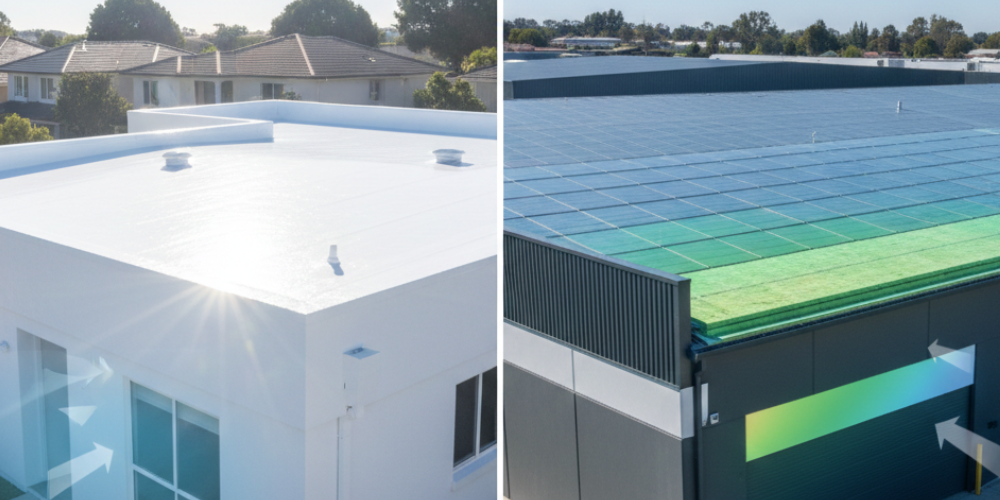
These are often the most practical solution for roofs and walls. They reflect a large part of the sun’s radiant energy before it enters the building. These are usually energy‑efficient, cost‑effective, and easy to apply.
2. Fiberglass and Ceramic Materials
These are low thermal conductivity materials often used in insulation applications. Fiberglass is a common choice for building insulation because it traps air and slows heat movement. Ceramic materials can handle higher temperatures and are used where heat exposure is intense.
3. Metal Sheets like Aluminum
Metals like aluminum reflect radiant heat well and are often used as outer layers in multi‑layered shields because they keep radiant heat from entering spaces.
4. Insulation Boards and Foam
Often used in industrial or specialized residential settings, insulation boards or sprayed foam form a barrier that slows conductive and convective heat transfer.
Each of these has its place. The best choice depends on your location, budget, installation complexity, and whether you’re treating a roof, wall, window area, or specific machinery.
How to Choose the Best Heat Proof Shield
Picking the right heat proof shield isn’t one‑size‑fits‑all. Here are some real‑world steps to help you decide:
1. Clarify Your Problem
Is your goal to:
-
Keep a home interior cooler?
-
Reduce energy use?
-
Protect sensitive equipment?
-
Lower roof surface temperatures?
Different goals might lead you to different solutions. For example, reflective roof coatings are excellent for homes, while layered insulation might be better for industrial heat sources.
2. Consider Local Climate
Hot, sunny climates benefit more from reflective and insulated solutions that block or reflect solar radiation. Areas with occasional heat spikes need materials that maintain performance over a range of temperatures.
3. Think About Installation and Maintenance
Some materials are easy to apply yourself, like reflective paint. Others, like layered insulation panels, often require trained professionals to install properly.
4. Look at Cost vs. Long‑Term Savings
A shield that costs more upfront but delivers significant energy savings and reduced wear on building systems tends to pay off over time.
Professional Heat Proof Solutions in Practice
If you’re looking for a tried and tested heat proof solution for your home, office, or industrial space in Pakistan, one name that frequently comes up is Lakhwa Chemical Services.
Lakhwa Chemical Services is a company based in Karachi that specializes in a range of construction chemical solutions. Their services include waterproofing, heat proofing, roof insulation, and chemical coatings tailored to local conditions.
What Lakhwa Chemical Services Offers
Lakhwa’s heat proofing services focus on reducing the heat load entering buildings and structures. Here’s how they approach it:
Reflective Roof Coatings
These coatings use special formulas that reflect sunlight, keeping roof surfaces cooler and reducing the heat transferred inside. Because roofs are the largest heat gain surface on most buildings, this makes a big impact on overall comfort and cooling needs.
Heat Resistant Roofing and Insulation Solutions
Beyond reflective paints, Lakhwa Chemical Services applies insulating layers and systems that prevent heat from moving into interior spaces. These solutions work well in both residential and industrial settings.
Combined Waterproofing and Heat Proofing
One advantage of professional services like what Lakhwa offers is that they often combine heat proofing with waterproofing. For example, roof membranes can both reflect heat and prevent water infiltration, extending roof life while improving comfort.
Custom Assessment and Application
Because different buildings have unique challenges, Lakhwa conducts site assessments and recommends solutions tailored to your specific needs and environment.
Real Benefits of a Professionally Installed Heat Proof Shield
While DIY products can help, there are clear benefits to professional installation:
1. Better Performance and Longevity
Professionally applied solutions tend to use higher‑grade materials and correct installation techniques that last longer.
2. Energy Savings
By reducing internal heat gain, you can run air conditioning less, lowering energy bills.
3. Less Wear and Tear
Materials that stay cooler under the sun tend to last longer, whether it’s roofing materials, paints, or interior systems.
4. Comfort and Productivity
In homes, comfortable indoor temperatures make daily living more enjoyable. In workplaces, cooler environments can improve productivity and reduce heat‑related stress.
Practical Examples
Residential Rooftops
A home in a hot city can easily see roof surface temperatures climb well above outdoor air temperature. Applying a reflective coating or insulation system can lower peak heat entry and cut down on AC usage.
Commercial Buildings
Large roofs on warehouses or offices can benefit from combined waterproofing and heat shielding that protects against both sun and rain, improving occupant comfort and reducing maintenance costs.
Industrial Settings
Warehouses that store heat‑sensitive goods or facilities with heat‑producing machinery need shields that manage both external and internal heat sources.
Final Thoughts
The best heat proof shield is one that matches your specific needs with the right materials and installation method. Reflective coatings, effective insulation, and professional installation combine to deliver lasting results.
For many in Pakistan facing high summer temperatures, professional services like those from Lakhwa Chemical Services offer reliable heat proof solutions designed for local conditions. Whether you’re upgrading a home roof or protecting a workspace, a tailored heat proof system can improve comfort and reduce costs over time.
Faqs
-
What is a heat proof shield?
It’s a barrier that reduces heat transfer, keeping interiors, equipment, and surfaces cooler. -
Where can I use a heat proof shield?
On rooftops, walls, machinery, and any area exposed to excessive heat. -
What materials are commonly used?
Reflective coatings, insulation foam, ceramic layers, fiberglass, and metal sheets. -
Does it reduce electricity bills?
Yes, by lowering heat entry, it decreases the need for air conditioning. -
Can it be applied to existing buildings?
Absolutely—many shields like coatings or panels can be retrofitted without major construction. -
Who can professionally install heat proof shields?
Companies like Lakhwa Chemical Services provide tailored heat proofing and insulation solutions for homes and workplaces.