Every concrete water tank eventually faces moisture, pressure and ageing. Without proper tank waterproofing, even a well-built tank starts to seep, crack and lose water. Choosing the best waterproofing coating for concrete water tanks protects your water supply and your property. This guide from LCS Waterproofing explains which coatings perform best, how to pick one and how professional tank waterproofing is done in Karachi.
What Is Tank Waterproofing?
Tank waterproofing is the process of sealing a water tank with a protective coating or membrane so water cannot escape through the walls, floor or joints. It also keeps outside moisture, soil water and contaminants from entering the tank.
Why Concrete Tanks Need Protection
Concrete is strong but porous. Under constant water pressure, tiny pores and hairline cracks let moisture travel through the wall. Over time this leads to leakage, rust in steel bars and structural damage.
Internal vs External Tank Waterproofing
Internal waterproofing is applied on the inner surface and stops water from penetrating the wall. External waterproofing protects the outer surface from weather and ground moisture. Most tanks need internal coating, while underground and exposed tanks often benefit from both.
Signs Your Tank Needs Waterproofing
Do not wait for a major failure. Look for these early signs:
- Damp patches or water stains on tank walls
- Water level falling faster than normal
- Cracks, flaking plaster or peeling paint
- Green algae or black fungus growth
- Rust marks or exposed steel
- Wet ceilings or walls near the tank
If you notice any of these, professional tank waterproofing should be your next step.
What Is the Best Waterproofing Coating for Concrete Water Tanks?
There is no single answer for every tank, but these coatings are the most trusted options.
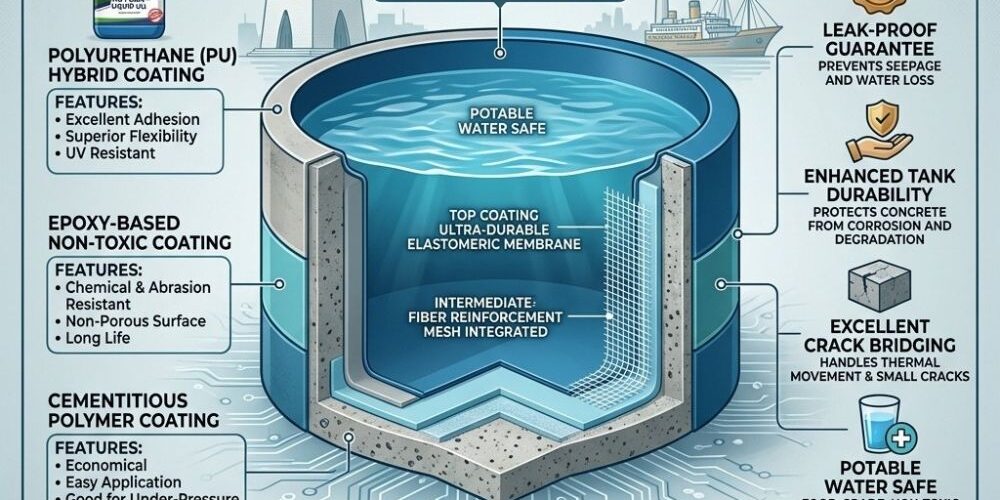
Polymer-Modified Cementitious Coating
This is the most popular choice for tank waterproofing, especially for drinking water tanks.
Why It Is Recommended
- Bonds tightly to concrete and masonry
- Works on slightly damp surfaces
- Resists water pressure from inside and outside
- Available in non-toxic grades for potable water
Epoxy Waterproofing Coating
Epoxy forms a tough, seamless layer that resists chemicals, abrasion and constant water contact.
Why It Is Recommended
- Very strong and long lasting
- Smooth surface that is easy to clean
- Good for industrial and treated water tanks
Crystalline Waterproofing
Crystalline materials grow inside the concrete and block pores permanently. They are very effective for underground and deep tanks.
Polyurethane Coating
Polyurethane stays flexible, which helps where the tank moves slightly with heat and structure changes.
Acrylic Elastomeric Coating
This coating suits the outer surface of rooftop tanks. It resists sun, rain and cracks, and helps reduce surface heat.
Coatings to Avoid Inside Drinking Water Tanks
Avoid bitumen paints and solvent-heavy products inside tanks used for drinking water. They can affect taste, smell and safety.
Which Coating Is Best for Your Tank Type?
Drinking Water Tanks
Choose a potable-safe cementitious coating or certified food-grade epoxy. Safety of stored water comes first.
Underground Water Tanks
Use crystalline or cementitious systems that can handle groundwater pressure, plus external protection where possible.
Rooftop and Overhead Tanks
Combine internal cementitious coating with an external heat-reflective acrylic layer for complete tank waterproofing.
Industrial and Commercial Tanks
Epoxy systems are often preferred because they handle heavy use, cleaning chemicals and long service demands.
Step-by-Step Tank Waterproofing Process
A premium coating fails if the surface is not prepared correctly. This is the process LCS Waterproofing follows.
Step 1: Inspection and Diagnosis
Our team studies the tank design, cracks, joints and the source of leakage before suggesting a solution.
Step 2: Draining and Cleaning
The tank is emptied. Algae, dirt, loose plaster and old coatings are removed completely.
Step 3: Crack and Joint Treatment
Cracks are widened slightly, cleaned and filled with repair mortar or flexible sealant. Wall-to-floor corners are strengthened.
Step 4: Surface Priming
A suitable primer is applied to improve adhesion and seal the substrate.
Step 5: Coating Application
Two to three coats are applied with the right thickness and drying time between layers.
Step 6: Curing and Rinsing
The coating is cured properly, then the tank is rinsed so it is safe to use.
Step 7: Water Testing
We fill the tank and monitor it for 48 to 72 hours to confirm the system is fully leak free.
Benefits of Professional Tank Waterproofing
Stops Leaks for Years
A well-applied coating blocks seepage and keeps every litre inside the tank.
Protects Water Quality
Sealed, smooth walls resist algae and bacteria growth, which supports cleaner water.
Extends Structure Life
Preventing moisture reaching the steel reinforcement avoids rust and cracking.
Reduces Long-Term Costs
Timely tank waterproofing costs much less than major repairs or tank replacement.
Protects Surrounding Walls and Floors
Leaking tanks often damage nearby rooms. Waterproofing removes that risk at the source.
Common Tank Waterproofing Mistakes
Skipping Surface Preparation
Coating over algae, dust or loose material causes early peeling.
Choosing an Unsuitable Material
The wrong product can fail quickly or contaminate drinking water.
Ignoring Cracks
Coating alone cannot fix structural cracks. They must be repaired first.
Applying Too Few Coats
A single thin coat gives weak protection. Follow the recommended thickness.
Hiring Inexperienced Workers
Poor workmanship is the leading reason tank waterproofing fails within a year or two.
How Long Does Tank Waterproofing Last?
Good tank waterproofing typically lasts around 5 to 15 years. Lifespan depends on the material, surface preparation, water quality, sun exposure and maintenance. An annual inspection helps you catch small problems before they grow.
What Affects Tank Waterproofing Cost in Karachi?
Prices vary because each tank is different. The main factors are:
- Size and capacity of the tank
- Underground or rooftop location
- Amount of crack repair needed
- Type and grade of coating
- Access and working conditions
A free inspection is the most reliable way to get an accurate quotation. LCS Waterproofing provides clear estimates after seeing your tank in person.
Why Choose LCS Waterproofing for Tank Waterproofing in Karachi?
LCS Waterproofing is a Karachi-based waterproofing and chemical solutions company serving homes, apartments, factories and commercial buildings.
Local Knowledge
We understand Karachi’s heat, humidity and salty coastal air, and we choose materials that stand up to them.
Skilled Technicians
Our team follows a proper process from inspection to final water testing.
Safe Materials
For drinking water tanks we recommend non-toxic systems that keep your stored water safe.
Wide Service Area
We provide tank waterproofing across Karachi, including DHA, Clifton, Gulshan-e-Iqbal, Gulistan-e-Jauhar, North Nazimabad, Korangi, Malir and SITE.
Honest Guidance
We explain the problem and the solution in simple words so you can decide with confidence.
Frequently Asked Questions About Tank Waterproofing
What is the best waterproofing coating for concrete water tanks?
For most drinking water tanks, a polymer-modified cementitious coating or a potable-grade epoxy is the best option. The final choice depends on tank type, size and condition.
How is tank waterproofing done?
The tank is emptied, cleaned, repaired, primed, coated in two or three layers, cured and then tested with water.
Is tank waterproofing safe for drinking water?
Yes, when non-toxic, potable-approved materials are used and the tank is cured and rinsed properly before refilling.
How many days does tank waterproofing take?
Most residential tanks need a few days including curing and testing. Large or heavily damaged tanks take longer.
Can I waterproof a tank without emptying it?
Temporary patches are possible, but a lasting solution requires an empty, clean and dry tank.
How often should tank waterproofing be repeated?
Usually every 5 to 15 years, depending on the coating and conditions. Regular inspections help you decide.
Maintenance Tips After Tank Waterproofing
- Clean the tank every six months
- Keep the lid closed to block dust and insects
- Inspect walls and joints once a year
- Avoid sharp tools and harsh chemicals inside the tank
- Repair any new crack as soon as it appears
Final Thoughts
The best waterproofing coating for concrete water tanks is the one matched to your tank type, water use and surface condition, and applied with proper preparation. Reliable tank waterproofing protects your water, your structure and your budget for many years. If your tank is leaking or showing early damage, act now before repairs become costly.
Contact LCS Waterproofing for an inspection and professional tank waterproofing in Karachi.