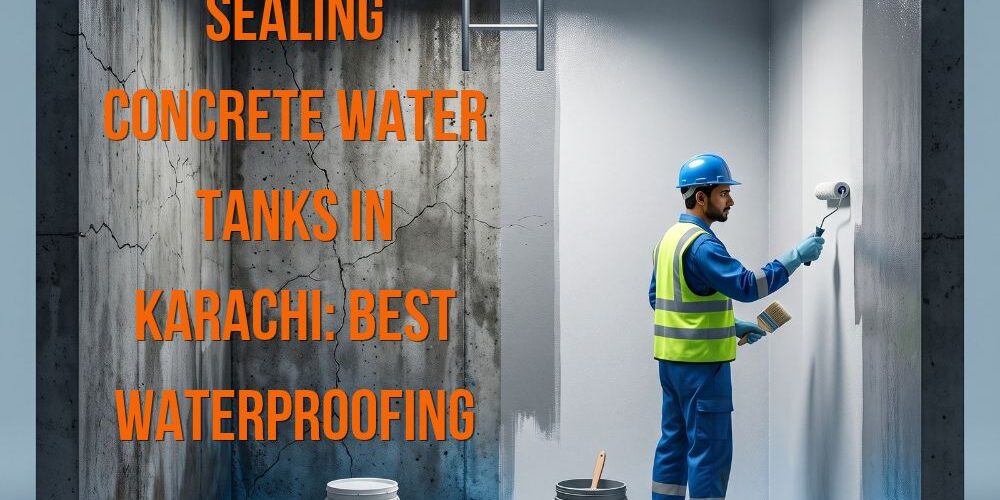
Concrete water tanks are the backbone of most Karachi homes, apartments and factories. With unreliable supply, almost everyone stores water, and almost every concrete tank will eventually start to seep if it is not sealed properly. The good news is that the problem is fixable, and fixing it correctly the first time saves a lot of money, water and stress.
This guide explains why concrete tanks leak, how professionals seal them, which waterproofing options work best in Karachi’s climate, and how to pick the right company for the job.
Why Do Concrete Water Tanks Leak?
Concrete looks tough, but it is full of microscopic pores. Under constant water pressure, moisture finds its way through. Karachi adds a few extra challenges on top.
Common Causes of Tank Leakage
- Hairline cracks from shrinkage, settling or temperature swings
- Weak construction joints where the wall meets the base or roof slab
- Poor concrete quality or inadequate curing during construction
- Pipe openings around inlet, outlet and overflow lines
- Heat expansion on rooftop tanks exposed to Karachi’s strong summer sun
- Salt and humidity in coastal air that slowly attack concrete and steel
- Old or failed coatings that have peeled or worn away
How Karachi’s Climate Makes It Worse
High daytime temperatures make concrete expand, and cooler nights make it contract. Do this day after day and small cracks appear. Add monsoon rain, coastal humidity and brackish groundwater around underground tanks, and the concrete is under attack from every side.
Signs Your Concrete Water Tank Needs Sealing
Do not wait for a visible puddle. Watch for these early warnings:
- Damp or dark patches on the outer wall or base
- Water level dropping faster than you use it
- Peeling paint or plaster near the tank
- White powdery deposits (efflorescence) on the surface
- Rust stains or exposed, corroded steel bars
- Green algae or a musty smell inside the tank
- Dampness on the ceiling or wall below an overhead tank
Catching these signs early usually means a simpler and cheaper repair.
What Happens If You Ignore a Leaking Tank?
A small leak rarely stays small. Over time you may face:
- Steady loss of stored water, which is costly when you buy tanker water
- Rusting reinforcement that swells and cracks the concrete from inside
- Structural weakening of the tank and surrounding slab
- Contaminated drinking water from outside seepage
- Damp, mould and peeling paint in the rooms around the tank
- A much bigger repair bill later
Best Waterproofing Options for Concrete Water Tanks
No single product suits every tank. The right choice depends on whether the tank is above or below ground, whether it holds drinking water and how much the structure moves.
Cementitious Waterproofing
A polymer-modified cement coating applied inside the tank. It bonds well with concrete, handles constant water pressure and is a popular, practical option for both new and old tanks.
Best for: Underground and overhead RCC tanks.
Crystalline Waterproofing
This type reacts with moisture inside the concrete and forms crystals that block pores. It becomes part of the concrete itself, so it does not peel.
Best for: Tanks with fine seepage and new construction.
Polyurethane (PU) Coatings
Flexible and stretchy, PU handles movement and temperature change well. This makes it useful for rooftop tanks in Karachi’s heat.
Best for: Tanks that expand and contract, provided a potable-grade product is chosen for drinking water.
Epoxy Coatings
Epoxy gives a hard, smooth, easy-to-clean finish. Certified potable-grade versions are commonly used where hygiene is a priority.
Best for: Drinking water and treated water tanks.
Crack Injection and Joint Sealing
Active leaks and wider cracks need resin injection or sealing before any coating goes on. A coating alone will not hold back a crack that is still moving.
Best for: Visible cracks, joints and pipe penetrations.
Quick Comparison
| Method | Flexibility | Ideal Use |
|---|---|---|
| Cementitious coating | Low to medium | Inside RCC tanks |
| Crystalline | Works inside concrete | New tanks and fine seepage |
| Polyurethane | High | Rooftop tanks with movement |
| Epoxy | Low | Hygienic finish for drinking water |
| Crack injection | Medium to high | Active leaks and cracks |
In many cases, the strongest result comes from combining methods: repair the cracks first, then apply the right coating system on top.
Is the Material Safe for Drinking Water?
This is the question many people forget to ask. If the tank stores drinking water, the waterproofing product must be potable-grade and non-toxic. Ask the contractor for the product’s data sheet and confirm it is approved for contact with drinking water. A cheap industrial coating can leave chemical taste or residue in your water.
How Professionals Seal a Concrete Water Tank: Step by Step
Quality waterproofing is mostly about preparation. Here is how a proper job unfolds.
Step 1: Inspection
The team checks the tank type, the age of the concrete, crack patterns, joints and pipe openings. Finding the real cause of the leak is what separates a lasting repair from a temporary patch.
Step 2: Draining and Deep Cleaning
The tank is emptied and scrubbed to remove algae, slime, loose plaster and old failed coatings. Coating cannot stick to dirty or crumbling surfaces.
Step 3: Repairing Cracks and Weak Areas
Cracks are opened, cleaned and filled with repair mortar or injection resin. Damaged concrete is patched, and rusted steel is treated.
Step 4: Rounding Corners and Joints
Sharp internal corners are a weak point. Rounding them with a repair mix helps the coating wrap around smoothly.
Step 5: Priming
A bonding primer helps the waterproofing layers grip the surface tightly. Skipping this step is a common reason coatings peel.
Step 6: Applying the Waterproofing Coats
Two or more coats go on with the right thickness and proper drying time between each. Rushing here ruins an otherwise good product.
Step 7: Curing and Leak Testing
After curing, the tank is filled and watched for a couple of days to confirm there is no seepage.
Step 8: Final Wash
Drinking water tanks are washed and flushed before being put back into use.
Internal vs External Sealing
Internal Waterproofing
Applied on the inside surface, this is the main barrier against water escaping through the walls. For most tanks, it matters most.
External Waterproofing
Applied on the outside, it protects against rain, sun and soil moisture. It is especially useful for underground tanks and exposed rooftop tanks.
Many tanks benefit from both, especially underground ones sitting in damp soil.
Underground vs Rooftop Tanks in Karachi
Underground Tanks
They face groundwater pressure, damp soil and salts. Crystalline or cementitious systems, backed by external protection, tend to perform well.
Rooftop Tanks
They bake in the sun. A flexible coating helps handle expansion, and a reflective outer finish can keep stored water cooler during peak summer.
Mistakes That Cause Waterproofing to Fail
- Painting over damp, dirty or algae-covered concrete
- Using ordinary paint instead of a real waterproofing system
- Choosing a non-potable product for a drinking water tank
- Ignoring cracks and joints before coating
- Applying a single thin coat to save time
- Skipping the water test after curing
- Picking a contractor purely on the lowest price
What Does Concrete Tank Sealing Cost in Karachi?
There is no fixed rate that fits every tank. The price usually depends on:
- Tank size and surface area: More area means more material and labour.
- Waterproofing system: Flexible and potable-grade systems usually cost more than basic coatings.
- Existing damage: Deep cracks, broken plaster or rusted steel add repair work.
- Access: Tight rooftop access or deep underground tanks take longer.
- Number of coats and warranty: More coats and longer guarantees raise the upfront cost but reduce repeat repairs.
A very cheap quote often hides thin coatings or skipped preparation. The smart move is to request a detailed written quotation that lists the materials, coats, area and warranty, ideally after a site inspection.
Why Choose LCS Waterproofing for Water Tank Sealing in Karachi?
A good waterproofing product is only half the story. The other half is the team applying it. LCS Waterproofing provides water tank waterproofing services in Karachi for homes, buildings and commercial properties, with a focus on proper diagnosis and careful application.
Here is what you can expect:
- Site inspection to find the real source of the leak
- Suitable materials matched to your tank, including options safe for drinking water
- Thorough preparation, crack repair and multi-coat application
- Leak testing before handover
- Transparent quotations so you know what you are paying for
- Local experience with Karachi’s heat, humidity and construction styles
Whether you have an old tank that has started to weep or a new one you want to protect from day one, LCS Waterproofing can inspect it and suggest the right solution.
How Long Does Tank Waterproofing Last?
With good preparation, quality materials and proper application, a well-done job can protect a tank for many years. The exact lifespan depends on the system chosen, how exposed the tank is to heat and moisture, and how well it is maintained. A quick yearly check, ideally before monsoon season, helps catch problems early.
Simple Tips to Keep Your Tank Sealed Longer
- Inspect the tank at least once a year
- Clean it regularly to prevent algae build-up
- Fix small cracks as soon as they appear
- Keep the lid closed and in good condition
- Avoid hanging heavy loads or hitting the walls
- Reapply or touch up coatings when they show wear
Frequently Asked Questions
What is the best waterproofing for a concrete water tank?
Cementitious and crystalline systems are widely used for concrete tanks, while PU and potable-grade epoxy suit specific needs. The best choice depends on your tank type and condition.
Can a concrete tank be waterproofed while it is full?
For a lasting job, the tank must be emptied, cleaned and dried. Leak injection may sometimes be done on small active leaks, but that is a repair rather than full waterproofing.
Is waterproofing safe for drinking water?
Yes, as long as potable-grade, certified products are used. Always ask for the product data sheet.
How long before I can refill the tank?
It depends on the product and the curing time recommended by the manufacturer. Your contractor should guide you.
Why does my rooftop tank leak more in summer?
Heat makes the concrete expand and contract, which opens hairline cracks. Flexible waterproofing systems handle this better.
Can paint stop a tank from leaking?
No. Paint is decorative and cannot resist water pressure. You need a proper waterproofing system.
How much does it cost to waterproof a tank in Karachi?
It varies by size, material, condition and access. A site inspection gives the most realistic quote.
Final Thoughts
Sealing a concrete water tank properly is about three things: understanding why it leaks, choosing a waterproofing system that suits your tank, and trusting a contractor who does the preparation right. Use potable-grade materials, never skip crack repair, and insist on a leak test before the job is signed off.
If your tank is leaking, or you simply want to protect it before the next monsoon, contact LCS Waterproofing in Karachi for an inspection and a clear, honest quote.