Water can cause serious damage to concrete structures if waterproofing is ignored. From basement walls and foundations to roofs, retaining walls, and underground structures, moisture can gradually lead to dampness, cracks, mold, corrosion, and expensive repairs. One solution commonly used for demanding waterproofing applications is Bituthene waterproofing membrane.
But how much does Bituthene waterproofing cost? The answer depends on several factors, including the membrane type, surface condition, project size, labor, location, and the additional materials required for proper installation.
In this guide, we will explain Bituthene waterproofing cost, installation methods, major pricing factors, benefits, and what to consider before hiring a waterproofing contractor.
What Is Bituthene Waterproofing?
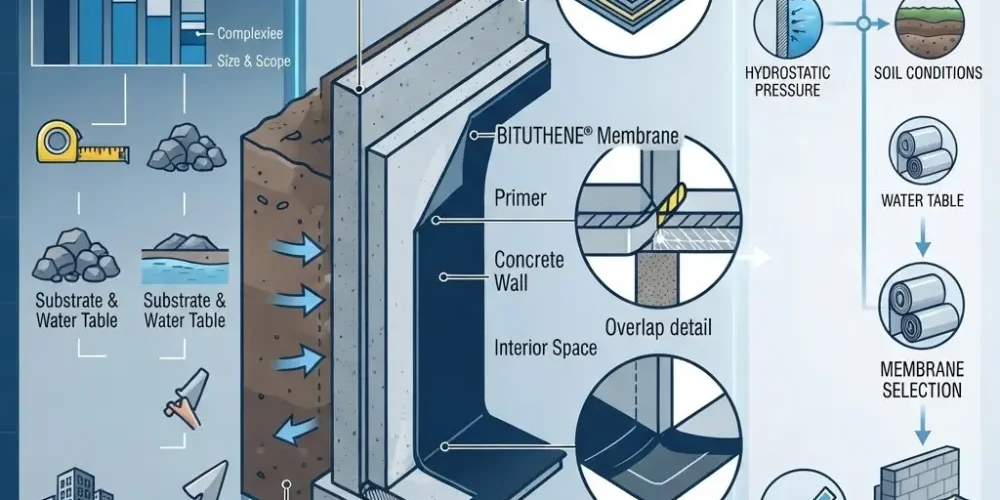
Bituthene is a sheet-applied waterproofing membrane based on rubberized asphalt technology. Certain Bituthene systems use a self-adhering membrane that is applied directly to a properly prepared substrate.
The membrane creates a continuous waterproof barrier that helps prevent water from passing through concrete and other suitable surfaces. Depending on the specific product and project requirements, Bituthene systems can be used for below-ground walls, foundations, podium decks, roofs, and other areas where reliable waterproofing is required.
Manufacturer installation guidance emphasizes that the substrate needs to be properly prepared before the membrane is applied. Surfaces generally need to be clean, smooth, and free from contaminants that could interfere with adhesion.
Why Is Bituthene Used for Waterproofing?
Bituthene is popular for projects where a consistent membrane layer is required. Its self-adhering design can also simplify installation compared with some hot-applied waterproofing systems.
A properly installed system can help protect structures against:
- Water seepage
- Ground moisture
- Dampness
- Hydrostatic pressure
- Concrete moisture penetration
- Long-term water-related deterioration
However, the performance of any waterproofing system depends heavily on correct surface preparation, detailing, membrane application, joints, penetrations, and protection after installation.
Bituthene Waterproofing Cost
There is no single fixed Bituthene waterproofing price per square foot because every project is different.
For projects in Pakistan, the final quotation can vary considerably depending on whether genuine imported Bituthene is being used, which membrane specification is selected, the size of the project, and the installation requirements.
As a general principle, you should consider the cost as a combination of membrane + primer + surface preparation + labor + detailing + protection + other accessories.
What Does the Price Usually Include?
A professional waterproofing quotation may include:
- Bituthene membrane
- Compatible primer
- Surface preparation
- Crack and joint treatment
- Corner detailing
- Membrane installation
- Overlap treatment
- Protection board where required
- Drainage or protection layers where specified
- Labor and equipment
This is why comparing two quotations only by their price per square foot can be misleading. One contractor may quote only for the membrane, while another may include preparation, installation, protection, and finishing.
Factors That Affect Bituthene Waterproofing Cost
Several factors can change the total project cost. Understanding them can help you compare quotations more accurately.
1. Type of Bituthene Membrane
Different Bituthene products are designed for different applications and performance requirements. GCP’s product documentation includes multiple Bituthene membrane systems, including 3000, 4000, 5000, 6000, 8000, and other specialized products.
A higher-performance membrane or specialized system may cost more than a standard option.
Choose the Membrane According to the Application
A basement wall, foundation, roof deck, and retaining wall may not have identical waterproofing requirements.
The right membrane should be selected according to factors such as:
- Water pressure
- Substrate condition
- Structural movement
- Exposure
- Temperature
- Installation environment
- Required protection system
Using a cheaper material that is unsuitable for the application can create bigger expenses later.
2. Surface Preparation
Surface preparation is one of the most important parts of waterproofing installation.
Before applying the membrane, the surface may need cleaning, leveling, crack repairs, removal of loose material, and treatment of rough or defective areas. Manufacturer guidance specifically calls for clean, dry, reasonably smooth surfaces free of dust, dirt, grease, and other contaminants.
If the existing concrete is damaged or uneven, additional preparation will increase the project cost.
3. Project Size
The total area being waterproofed has a direct impact on material and labor requirements.
A small basement or repair area may have a higher cost per square foot because mobilization and setup costs are spread across a smaller area.
Larger commercial or industrial projects may have better material efficiency, although complex detailing can still increase the overall cost.
4. Labor and Installation Difficulty
Waterproofing a simple horizontal surface is generally different from waterproofing a complicated basement with multiple corners, penetrations, construction joints, drains, and wall-to-floor connections.
Difficult access, greater wall heights, existing structures, and restricted working areas can all increase labor costs.
5. Corners, Joints and Penetrations
Waterproofing failures often occur around details rather than in the middle of a membrane sheet.
Corners, pipes, drains, construction joints, cracks, and penetrations need careful treatment. Bituthene installation documentation includes specific detailing requirements for corners and other transitions.
More complicated detailing means additional labor and materials.
How Is Bituthene Waterproofing Installed?
Professional installation involves more than simply sticking a membrane onto concrete.
Step 1: Inspect the Surface
The contractor first checks the substrate for cracks, holes, rough areas, contamination, loose concrete, and other problems.
Any major defects should be corrected before membrane application.
Step 2: Clean and Prepare the Substrate
Dust, dirt, grease, debris, and loose materials must be removed. The surface should provide a suitable base for the membrane.
Where required, compatible repair materials are used to create a smooth and stable surface.
Step 3: Apply Primer
Depending on the specific Bituthene system, an approved primer is applied to the substrate.
The primer needs to dry according to the manufacturer’s requirements before the membrane is installed.
Step 4: Apply the Membrane
The release paper is removed and the self-adhesive membrane is carefully applied to the prepared surface.
Installers need to avoid trapped air and ensure the membrane achieves proper contact with the substrate.
Adjacent sheets are overlapped according to the product requirements. Some Bituthene systems specify a minimum 50 mm overlap at side and end laps.
Step 5: Treat Corners and Details
Special attention is given to:
- Internal corners
- External corners
- Pipe penetrations
- Drains
- Construction joints
- Cracks
- Wall-to-floor transitions
These areas may require additional membrane strips, liquid membrane, sealants, or other compatible detailing products.
Step 6: Protect the Membrane
Once installed, the waterproofing membrane should be protected from damage caused by construction activities, backfilling, sharp materials, or other site work.
For some systems, protection board or drainage composite is installed over the membrane. Manufacturer guidance recommends protecting the membrane as soon as possible after application where required by the system.
Benefits of Bituthene Waterproofing
A properly designed and installed Bituthene system can provide several advantages.
Strong Waterproofing Barrier
The membrane creates a continuous barrier designed to prevent water penetration through the protected surface.
Self-Adhering Installation
Many Bituthene membranes are self-adhering, allowing cold application without requiring the membrane itself to be torch-applied.
Suitable for Below-Ground Applications
Bituthene systems are commonly used in substructure waterproofing applications, including foundations and below-ground walls.
Flexible Membrane System
Certain Bituthene products are designed to accommodate some movement and cracking characteristics of concrete. Performance varies by product, so the specific technical data should always be checked before selection.
Is Bituthene Worth the Cost?
The cheapest waterproofing option is not necessarily the most economical over the life of a building.
Water leakage can damage finishes, concrete, stored materials, electrical systems, interiors, and structural components. Repairing waterproofing after a building has been completed can also be much more difficult than installing the correct system during construction.
For this reason, the decision should be based on the complete waterproofing system and expected service requirements, rather than simply looking at the lowest material price.
Choosing a Bituthene Waterproofing Contractor
When comparing waterproofing companies, ask for a detailed quotation rather than accepting a single price.
Questions to Ask Your Contractor
Before starting the project, ask:
- Which Bituthene product will be used?
- What is the membrane thickness and specification?
- Is primer included?
- Is surface preparation included?
- How will cracks and joints be treated?
- Are corners and pipe penetrations included?
- Is protection board included?
- What areas are covered by the quotation?
- What warranty is provided?
- Who will supervise the installation?
A professional contractor should be able to explain the complete system instead of simply quoting a price per square foot.
Bituthene Waterproofing Services by LCS Chemical Services
If you are planning a waterproofing project, LCS Chemical Services can help you evaluate the appropriate waterproofing approach based on the structure, surface condition, and project requirements.
Whether the requirement involves a basement, foundation, roof, retaining wall, or another water-sensitive structure, proper assessment and installation are important for achieving long-term protection.
The focus should not only be on applying waterproofing material but also on preparing the substrate, treating vulnerable details, installing the membrane correctly, and protecting the completed system.
Final Thoughts on Bituthene Waterproofing Cost
The cost of Bituthene waterproofing depends on much more than the price of the membrane itself. Material specification, surface preparation, labor, project size, detailing, site conditions, and protection requirements can all affect the final quotation.
A professional installation begins with proper substrate preparation and continues through careful membrane application, overlap treatment, detailing, and protection. Manufacturer documentation also highlights the importance of clean substrates, suitable priming, correct membrane placement, and protection after installation.
If you are comparing Bituthene waterproofing prices, ask contractors for a complete breakdown rather than choosing based solely on the lowest quoted rate. A detailed quotation makes it easier to understand what you are actually paying for and whether the proposed system is suitable for your building.
For reliable waterproofing planning and professional application, LCS Chemical Services can assess your project and recommend a suitable waterproofing solution based on its specific requirements.
Frequently Asked Questions
How much does Bituthene waterproofing cost?
The price varies according to the membrane specification, project size, surface condition, labor, detailing, and additional protection requirements. A site-specific quotation is the most accurate way to determine the final cost.
Is Bituthene suitable for basement waterproofing?
Yes, specific Bituthene membrane systems are designed for substructure and below-ground waterproofing applications. The appropriate product should be selected according to the project’s conditions and manufacturer requirements.
Does Bituthene require primer?
Many Bituthene systems require or specify compatible priming depending on the substrate and product. Always follow the technical instructions for the exact membrane being installed.
How long does Bituthene waterproofing last?
Its service life depends on the specific product, installation quality, exposure, substrate, drainage, protection, and overall waterproofing design. Correct installation and protection are essential for long-term performance.
Can Bituthene be installed over an existing surface?
It may be possible on suitable existing substrates, but the surface must first be inspected and properly prepared. Existing contamination, cracks, loose material, moisture, and uneven areas may need correction before installation.