
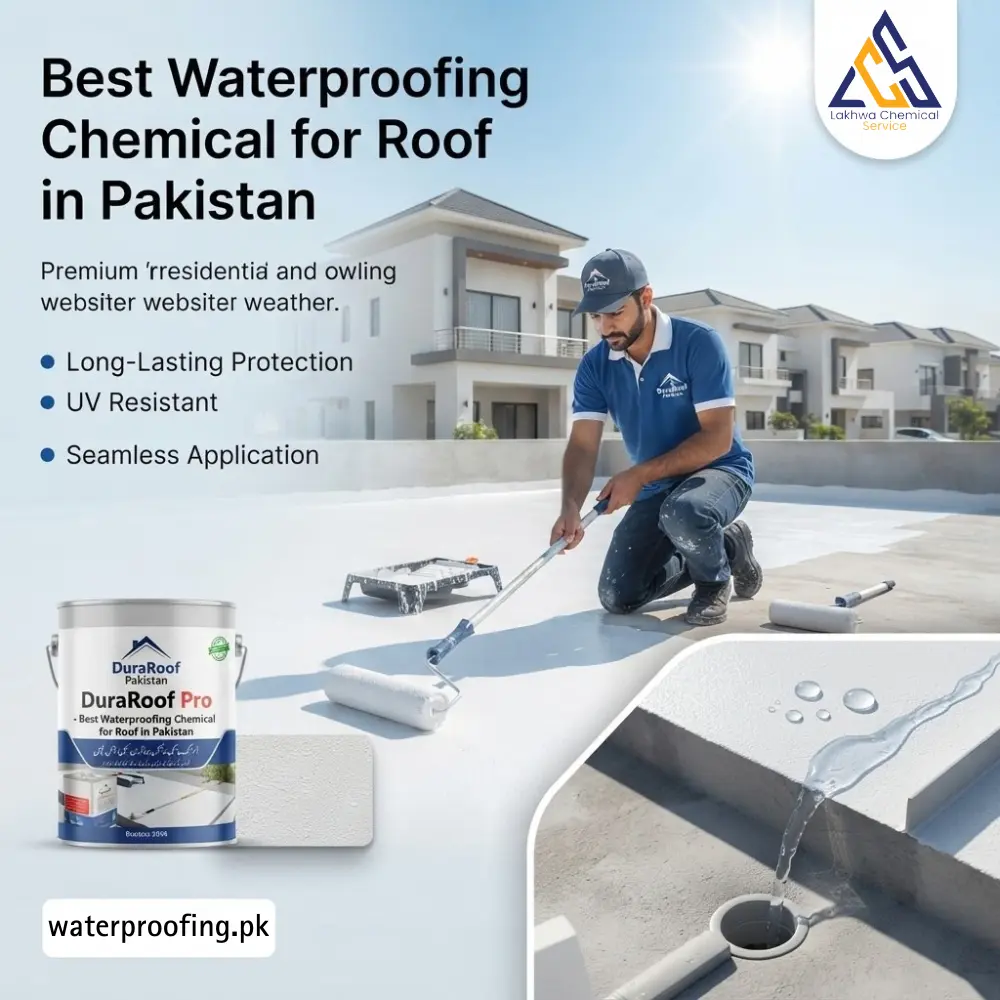
Roof leakage is one of the most common and costly problems faced by property owners across Pakistan. Between the intense summer heat, the seasonal monsoon rains, and the coastal humidity in cities like Karachi, roofs are under constant pressure to keep water out. Choosing the right waterproofing chemical is the single most important decision in preventing seepage, structural damage, and expensive repairs down the line. This guide breaks down the best waterproofing chemical options available in Pakistan and how to choose the right one for your roof.
Why Roof Waterproofing Matters in Pakistan
Pakistan’s climate varies dramatically by region, but almost every part of the country experiences either heavy monsoon rainfall, extreme heat, or both. In coastal cities such as Karachi, roofs face humidity year-round along with intense sun exposure that causes concrete to expand and contract repeatedly. This constant thermal movement creates hairline cracks that, left untreated, become entry points for water.
Without proper waterproofing, water seepage can lead to weakened concrete, corroded steel reinforcement, mold growth, and damaged ceilings and walls. A quality waterproofing chemical creates a protective barrier that keeps moisture out while allowing the structure to breathe and flex naturally with temperature changes.
Signs Your Roof Needs Waterproofing
Before choosing a chemical, it helps to recognize the warning signs of a compromised roof. Common indicators include damp patches on ceilings after rainfall, peeling paint on the top floor, visible cracks in the roof slab, and a musty smell in rooms directly beneath the roof. If any of these apply to your property, it’s a strong signal that waterproofing treatment is overdue.
Types of Waterproofing Chemicals Available in Pakistan
Acrylic Waterproofing Coatings
Acrylic-based waterproofing chemicals are among the most widely used solutions in Pakistan due to their affordability and ease of application. They form a flexible, UV-resistant membrane on the roof surface and are typically applied in two to three coats using a brush, roller, or spray. Acrylic coatings work well for flat roofs and are often chosen for residential properties.
Polyurethane Waterproofing Membranes
Polyurethane-based chemicals offer superior elasticity and durability compared to acrylic options. They can stretch significantly without cracking, which makes them highly effective for roofs that experience frequent temperature swings, such as those in Karachi and other high-heat cities. Polyurethane membranes also bond strongly to concrete, reducing the risk of peeling or delamination over time.
Bituminous Waterproofing Compounds
Bitumen-based waterproofing chemicals, including modified bitumen and bituminous membranes, are a long-standing solution for flat and low-slope roofs across Pakistan. These products are especially effective at handling standing water, which is common during monsoon season, and provide strong resistance against prolonged water exposure.
Cementitious Waterproofing Coatings
Cementitious waterproofing chemicals are cement-based compounds mixed with polymers to improve flexibility and water resistance. They are commonly used for water tanks, basements, and areas where a rigid, durable coating is preferred over a flexible membrane.
Silicone and Elastomeric Coatings
Silicone-based and elastomeric waterproofing chemicals are engineered for maximum flexibility and often double as heat-reflective coatings. These are a good option for roofs that need both waterproofing and a reduction in heat absorption, addressing two major concerns with a single application.
How to Choose the Best Waterproofing Chemical for Your Roof
Consider Your Roof Type
Flat roofs, sloped roofs, and terraces each respond differently to various waterproofing products. Flat roofs prone to standing water generally benefit most from bituminous or polyurethane systems, while sloped roofs may perform well with acrylic coatings.
Evaluate Climate Exposure
Roofs exposed to intense sun and frequent temperature changes require a chemical with strong elasticity, such as polyurethane or elastomeric coatings, to prevent cracking from thermal expansion and contraction. Roofs in areas with heavy rainfall need a product with proven resistance to prolonged water contact.
Check for UV Resistance
Since most roofs in Pakistan are exposed to direct sunlight for the majority of the year, UV resistance is essential. A waterproofing chemical that degrades under sunlight will lose its protective properties much faster, requiring earlier reapplication.
Assess Application and Maintenance Needs
Some waterproofing systems require more extensive surface preparation, multiple coats, or specialized application tools. Understanding the maintenance requirements of a product before installation helps avoid unexpected issues later.
Look for Combined Waterproofing and Heat Resistance
Many property owners in Pakistan benefit from choosing a waterproofing chemical that also offers heat-reflective properties, reducing both water damage risk and indoor temperatures in a single treatment.
Common Mistakes to Avoid
Skipping Surface Preparation
Applying waterproofing chemical over a dirty, cracked, or poorly prepared surface significantly reduces its effectiveness and lifespan. Proper cleaning, crack filling, and priming are essential steps that should never be skipped.
Using a Single Coat
A single thin coat rarely provides adequate protection. Most professional applications require two to three coats to ensure complete, even coverage without weak spots.
Ignoring Drainage Issues
Even the best waterproofing chemical cannot fully compensate for poor roof drainage. Standing water that isn’t allowed to run off properly puts continuous stress on any waterproofing membrane, shortening its lifespan.
Choosing Based on Price Alone
Selecting a waterproofing product purely because it’s the cheapest option often leads to premature failure and the need for repeated reapplication, ultimately costing more in the long run than a quality solution applied correctly the first time.
Why Professional Application Matters
Even the best waterproofing chemical will underperform if applied incorrectly. Professional application ensures proper surface preparation, correct number of coats, adequate curing time, and attention to vulnerable areas like joints, corners, and drain outlets. This is why working with an experienced waterproofing company is just as important as selecting the right product.
LCS Chemical Services: Trusted Waterproofing Solutions in Karachi
LCS Chemical Services is a Karachi-based provider specializing in professional roof waterproofing and heat proofing solutions using high-quality chemical systems suited to Pakistan’s demanding climate. Their team assesses each roof’s condition, exposure, and structure before recommending the most appropriate waterproofing chemical, whether that’s an acrylic coating, polyurethane membrane, or bituminous system.
Working with an established local provider like LCS Chemical Services ensures the waterproofing product is matched correctly to the roof type and applied with proper technique, which is often the deciding factor between a treatment that lasts for years and one that fails prematurely.
Getting a Professional Roof Assessment
Since the ideal waterproofing chemical depends heavily on the specific characteristics of your roof, a direct site inspection remains the most reliable way to determine the right product and application plan. LCS Chemical Services can evaluate your roof and recommend a tailored waterproofing solution suited to your property’s needs.
Frequently Asked Questions
What is the most durable waterproofing chemical for roofs?
Polyurethane and bituminous waterproofing systems are generally considered among the most durable options due to their strong elasticity and resistance to water exposure, though the best choice depends on your specific roof type and climate exposure.
Can waterproofing chemical be applied over an old, existing coating?
In many cases, yes, provided the old surface is properly cleaned and any damage is repaired first. A professional assessment can confirm whether removal of the existing coating is necessary.
How often does roof waterproofing need to be reapplied?
This varies by product type and exposure conditions, but quality waterproofing systems are generally designed to provide multi-year protection before requiring maintenance or reapplication.
Does waterproofing chemical also help with heat reduction?
Certain waterproofing products, particularly silicone and elastomeric coatings, offer reflective properties that can help reduce heat absorption in addition to their primary waterproofing function.
Is waterproofing necessary for roofs that rarely see rain?
Yes. Even in drier regions, temperature fluctuations cause concrete to expand and contract, creating cracks that can lead to leakage during occasional rainfall or from condensation and humidity.
Conclusion
Choosing the best waterproofing chemical for your roof in Pakistan depends on your roof type, climate exposure, and specific concerns like heat or standing water. Acrylic, polyurethane, bituminous, and elastomeric coatings each offer distinct advantages, making a professional assessment the most reliable way to determine the right fit. LCS Chemical Services offers this kind of tailored evaluation, helping property owners across Karachi choose and correctly apply the most effective waterproofing solution for their roof.